FFPE Downstream Platform Compatibility: Connecting Singulator 200+ Nuclei to snRNA-seq, Spatial, and ATAC-seq Workflows
The protocols, benchmarks, and expected results described in this guide assume properly prepared, high-quality FFPE blocks. Fixation conditions, storage history, and block age all affect downstream performance. Results from degraded, over-fixed, or improperly stored specimens may differ. Always validate block quality before committing precious samples to a full experiment.
Why platform choice shapes every decision before it
Most FFPE nuclei extraction guides focus on getting nuclei out of the block. That is the easy part to think about, because the workflow ends with a tube of nuclei suspension. But the real question is what happens to that tube next. Each downstream platform has its own input requirements, chemistry constraints, and failure modes when working with FFPE-derived material.
A nuclei prep that looks perfect for 10x Flex may perform differently on an ATAC-seq protocol, because the two platforms care about different molecular properties. Flex needs intact probe-binding sites on fragmented RNA. ATAC-seq needs accessible chromatin that formalin crosslinking may have locked shut. Understanding these differences before starting the extraction, not after, prevents wasted tissue, reagents, and time.
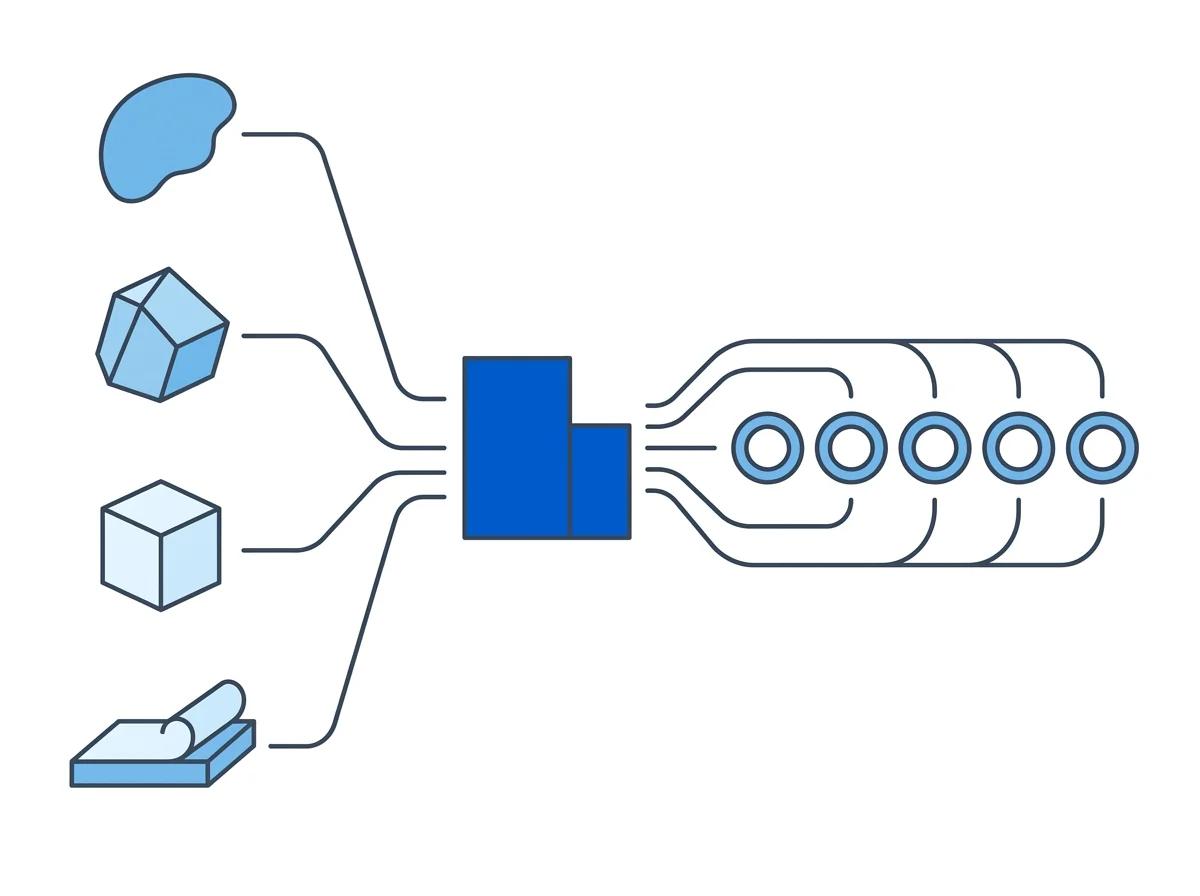
The Singulator 200+ S200+ Only produces nuclei through a standardized two-cartridge workflow: GREEN for deparaffinization and rehydration, then YELLOW NIC+ for nuclei isolation. That consistency matters for downstream compatibility, because variable prep quality is the most common reason sequencing experiments fail, and the most expensive one.
TL;DR - Platform compatibility essentials
- 10x Chromium Flex (snRNA-seq): directly validated with S200+ nuclei; uses probe-based chemistry that handles fragmented FFPE RNA
- 10x Xenium (spatial): S200+ nuclei used at MSKCC to build snRNA-seq reference atlases that annotate Xenium spatial data
- ATAC-seq from FFPE: possible with specialized FFPE-ATAC protocols, but crosslinking limits signal; not a direct drop-in
- Visium/MERFISH: work with tissue sections (no dissociation needed), but pair well with S200+ snRNA-seq for cell-type annotation
- Quality gates: check DV200 (>50% for Flex), yield (>500K nuclei), and morphology before committing to any platform
Platform-by-platform guide
What each downstream workflow needs from your FFPE nuclei, and how to set up for success.
10x Chromium Flex (snRNA-seq) Prepare nuclei for 10x Chromium Flex with probe-based snRNA-seq
The 10x Genomics Chromium Gene Expression Flex assay is the primary validated pathway for snRNA-seq from FFPE tissue. It uses probe-based hybridization rather than poly-A capture, which is the reason it works at all with archival material. Formalin fixation fragments RNA and damages poly-A tails, making standard 3' capture assays unreliable. The Flex probes hybridize to fragments as short as 25 nucleotides, bypassing the degradation problem entirely.
Direct validation data
In the PDAC FFPE tissue study, Singulator 200+ nuclei processed through 10x Flex with Cell Ranger v8 and Seurat v5 produced sequencing metrics of 1,209-1,456 median genes per cell and 1,844-2,245 median UMI counts. These numbers were consistent across both Singulator and manual preparations, confirming that the automated workflow produces platform-ready nuclei.
10x Genomics recommends a minimum of 500,000 nuclei for a standard Flex run. The Singulator 200+ typically yields >1 million nuclei from a single 50 micrometer curl (the Singulator 200+ FFPE nuclei isolation protocol), giving enough input from one run with material to spare for QC. Target DV200 >50% before committing to library prep. Measure RNA quality from a small aliquot of the nuclei lysate on a Bioanalyzer or TapeStation.
Library prep considerations
The Flex workflow adds a fixation and probe hybridization step before GEM-X partitioning. Because the nuclei are already fixed (they came from FFPE), some labs skip the additional fixation step, but 10x recommends following the full protocol to ensure consistent probe binding. Use the recommended nuclei concentration for loading: approximately 16,000 nuclei per channel for a target recovery of 10,000.
The Chromium Flex assay is not compatible with Feature Barcode (cell surface protein detection) when using FFPE samples. Formalin crosslinking disrupts the antibody-epitope interactions needed for surface protein tagging. For protein-level data from FFPE, consider spatial proteomics platforms like Akoya PhenoCycler or NanoString GeoMx DSP instead.
Xenium spatial transcriptomics Pair Singulator 200+ nuclei with Xenium for spatial-plus-single-cell analysis
10x Xenium is an in situ spatial transcriptomics platform that maps gene expression within intact tissue sections. It does not require dissociated nuclei as input. So why is it in a guide about downstream platform compatibility? Because the highest-impact FFPE studies are now combining spatial and single-cell data from the same tissue block, and the Singulator 200+ is the bridge between the two approaches.
The MSKCC integration study
At Memorial Sloan Kettering Cancer Center, researchers in the Dana Pe'er laboratory used the Singulator 200+ to extract nuclei from FFPE mouse brain tissue with melanoma metastasis. The snRNA-seq data generated from these nuclei was then used to annotate cell types in Xenium spatial data from adjacent sections of the same block. The snRNA-seq revealed discernible immune cell differences that overlapping Xenium signatures could not resolve on their own.
A single FFPE block can serve both spatial and dissociation workflows. Cut 5-10 micrometer sections for Xenium, and one or two 50 micrometer curls for S200+ nuclei extraction. Process both in the same day: the spatial sections go to the Xenium instrument while the curls go through the 60-minute Singulator workflow. The snRNA-seq data becomes the cell-type reference atlas for interpreting the spatial results.
When spatial alone is not enough
Xenium panels target specific genes, which means they can miss cell subtypes defined by genes outside the panel. Computational deconvolution of spatial spots is imprecise without a reference transcriptome. snRNA-seq from the same block provides that reference at full-genome depth, resolving ambiguous cell assignments in the spatial data. This "Rosetta Stone" approach is becoming the standard for FFPE tissue analysis in translational oncology.
Coordinate with pathology before sectioning the block. Reserve curls for nuclei extraction at the same time spatial sections are cut. This avoids the situation where a block is exhausted on spatial sections with none left for snRNA-seq. For precious blocks, the S200+ minimum input of 2 mg means even a thin allocation provides enough material.
ATAC-seq and chromatin access Understand the specific challenges of chromatin accessibility assays on FFPE nuclei
Assay for Transposase-Accessible Chromatin (ATAC-seq) maps open chromatin regions by inserting sequencing adapters at accessible sites. The Tn5 transposase needs physical access to DNA, and formalin crosslinking works directly against that by bonding proteins to DNA and proteins to each other. This makes FFPE-derived nuclei fundamentally more difficult for ATAC-seq than for RNA-based assays.
FFPE-ATAC: a specialized workaround
Standard ATAC-seq protocols fail on FFPE tissue. However, the FFPE-ATAC method, published in Genome Research, demonstrated that chromatin accessibility profiling is possible from archival tissue using modified transposition conditions. The protocol uses extended incubation times and adjusted Tn5 concentrations to work with partially crosslinked chromatin. Results correlate with fresh tissue ATAC-seq data, though with reduced signal-to-noise ratios.
ATAC-seq on FFPE is more sensitive to pre-analytical variables than snRNA-seq. Blocks fixed for >48 hours or stored in unbuffered formalin show substantially reduced chromatin accessibility signal. If ATAC-seq is a priority, request fixation records from the pathology archive and preferentially select blocks with controlled fixation (buffered formalin, 24-hour fixation).
Using S200+ nuclei for ATAC
The Singulator 200+ nuclei can serve as input for FFPE-ATAC workflows. The automated deparaffinization through the GREEN cartridge and nuclei isolation through the YELLOW NIC+ cartridge produce a clean nuclei suspension that can then go into the transposition reaction. The standardized processing is an advantage here, because manual deparaffinization introduces its own variability into the chromatin state. That said, FFPE-ATAC remains an emerging application, and results vary more widely than snRNA-seq across tissue types and block ages.
For combined gene expression and chromatin accessibility, the 10x Genomics Multiome assay (joint ATAC + Gene Expression) is currently validated only for fresh and frozen tissue, not FFPE. If your samples are available fresh, consider processing them on the Singulator for nuclei isolation and running Multiome directly. For archival FFPE where Multiome is not an option, running FFPE-ATAC and 10x Flex separately on different curls from the same block provides both data modalities.
Visium and MERFISH pairing Use Visium and MERFISH data alongside Singulator 200+ snRNA-seq for full tissue characterization
10x Visium (including Visium HD and CytAssist) and MERFISH are spatial transcriptomics platforms that analyze intact tissue sections. Neither requires dissociated nuclei. They work directly with thin FFPE sections mounted on slides. But like Xenium, they produce richer results when paired with snRNA-seq data from the same tissue block.
Visium CytAssist and FFPE
The Visium CytAssist workflow is specifically designed for FFPE. Pathologists stain tissue on standard glass slides with H&E or immunofluorescence, then the CytAssist instrument transfers the molecular content to a Visium capture slide. The probe-based chemistry handles FFPE-degraded RNA. Visium HD pushes resolution to 2 x 2 micrometer squares, approaching single-cell scale in dense tissue regions.
Even at HD resolution, Visium spots often contain multiple cells, making computational deconvolution necessary. snRNA-seq data from the Singulator 200+ provides the cell-type signatures needed for accurate deconvolution. Without that reference, algorithms must rely on published atlases that may not match the specific tissue type, disease state, or species being studied.
Cut adjacent sections for spatial and dissociation analysis. The closer the sections, the more directly the snRNA-seq reference matches the spatial data. For tumors with regional heterogeneity, note the orientation of the block so that corresponding regions can be identified between the spatial section and the curl used for nuclei extraction.
MERFISH compatibility
MERFISH (Multiplexed Error-Robust Fluorescence In Situ Hybridization) uses sequential rounds of fluorescent probe hybridization to image hundreds to thousands of RNA species in situ. The technology works with FFPE sections after deparaffinization and antigen retrieval. Like Xenium and Visium, MERFISH benefits from an snRNA-seq companion dataset: the single-cell data validates the probe panel's coverage and identifies cell populations that the panel may miss.
A standard diagnostic FFPE block may contain 200-500 or more 5 micrometer sections but only 10-20 fifty-micrometer curls worth of tissue. Plan the allocation carefully: spatial platforms consume thin sections, while the S200+ needs thicker curls. Reserve one or two curls for nuclei extraction before committing the rest of the block to spatial sectioning.
Multi-platform study design Design multi-platform studies that get the most from each FFPE block
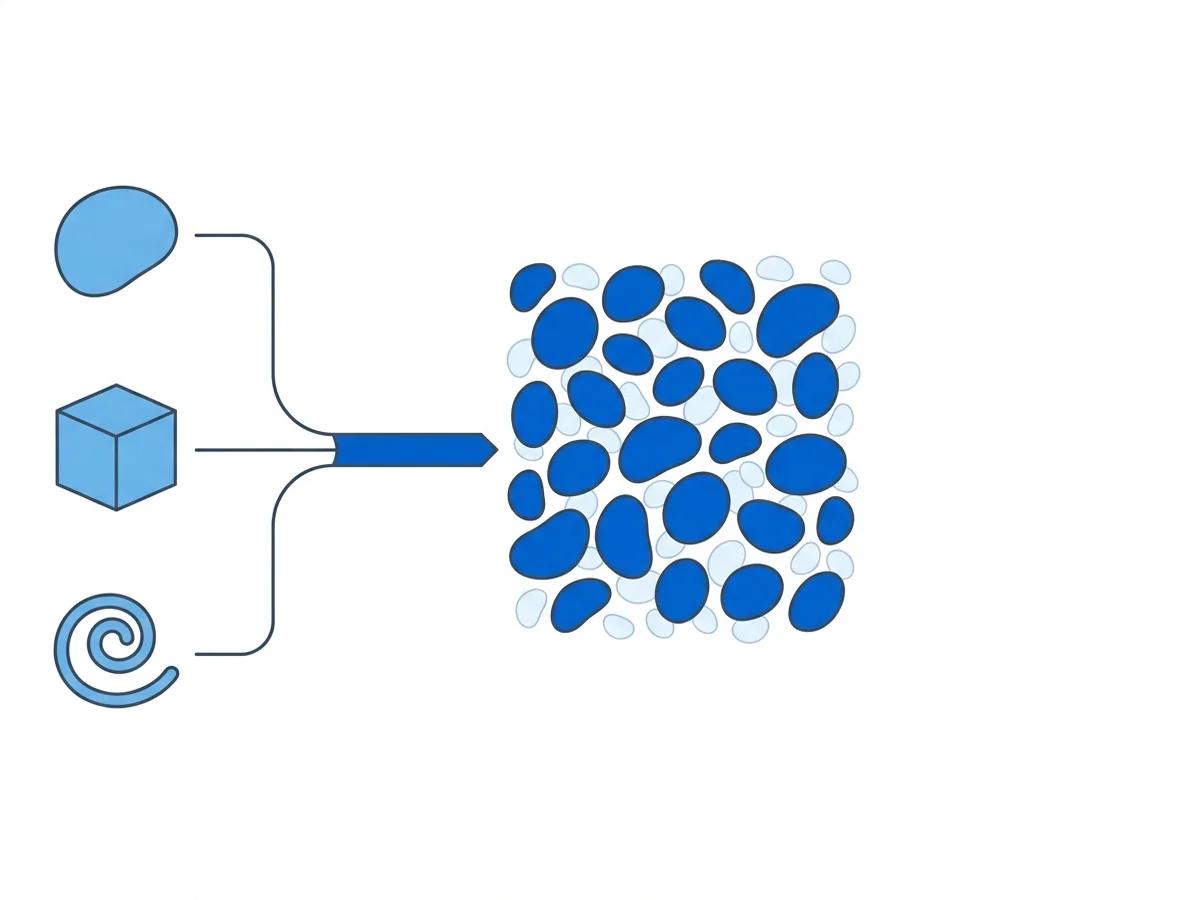
The most informative FFPE studies are not single-platform experiments. They combine spatial context (where cells are) with single-cell depth (what cells are expressing) from the same tissue block. The Singulator 200+ makes the single-cell side of this equation practical by reducing the prep to a 60-minute automated workflow. But getting the study design right requires thinking about all platforms simultaneously before the first section is cut.
A practical block allocation plan
| Platform | Section thickness | Purpose |
|---|---|---|
| H&E / IHC | 3-5 micrometer | Morphological assessment and region selection |
| Visium CytAssist or Xenium | 5-10 micrometer | Spatial transcriptomics with tissue context |
| Singulator 200+ (snRNA-seq) | 50 micrometer curl | Cell-type atlas for spatial annotation |
| FFPE-ATAC (optional) | 50 micrometer curl | Chromatin accessibility mapping |
Spatial platforms have their own processing timelines. Xenium runs take 1-2 days. Visium CytAssist library prep spans a full day. The Singulator 200+ workflow takes 60 minutes with less than 5 minutes hands-on, so it fits easily alongside spatial processing. Run the S200+ nuclei extraction in the morning, start 10x Flex library prep by afternoon, and use the wait times in the Flex protocol to set up spatial slides.
Validated platform combinations
Based on published data and application notes, these combinations have been directly validated with Singulator 200+ FFPE nuclei:
- S200+ nuclei + 10x Flex: PDAC tissue study, publication-grade sequencing metrics across replicates
- S200+ nuclei + Xenium: MSKCC mouse brain melanoma metastasis, immune cell subtype resolution
- S200+ nuclei + PERFF-seq: Stanford/MSKCC validation for rare cell sequencing from FFPE
For labs new to FFPE single-cell work, 10x Chromium Flex is the most straightforward entry point: validated input, established bioinformatics pipelines, and growing FFPE literature to benchmark against. Once the snRNA-seq workflow is running smoothly, adding a spatial modality to the same blocks doubles the information without doubling the sample processing burden.