What "fully automated nuclei isolation" actually means — across fresh, frozen, and FFPE
One software-controlled workflow from tissue to sequencing-ready nuclei, whatever you start with. Here's what "fully automated" rules out — and the hardest case that proves it.
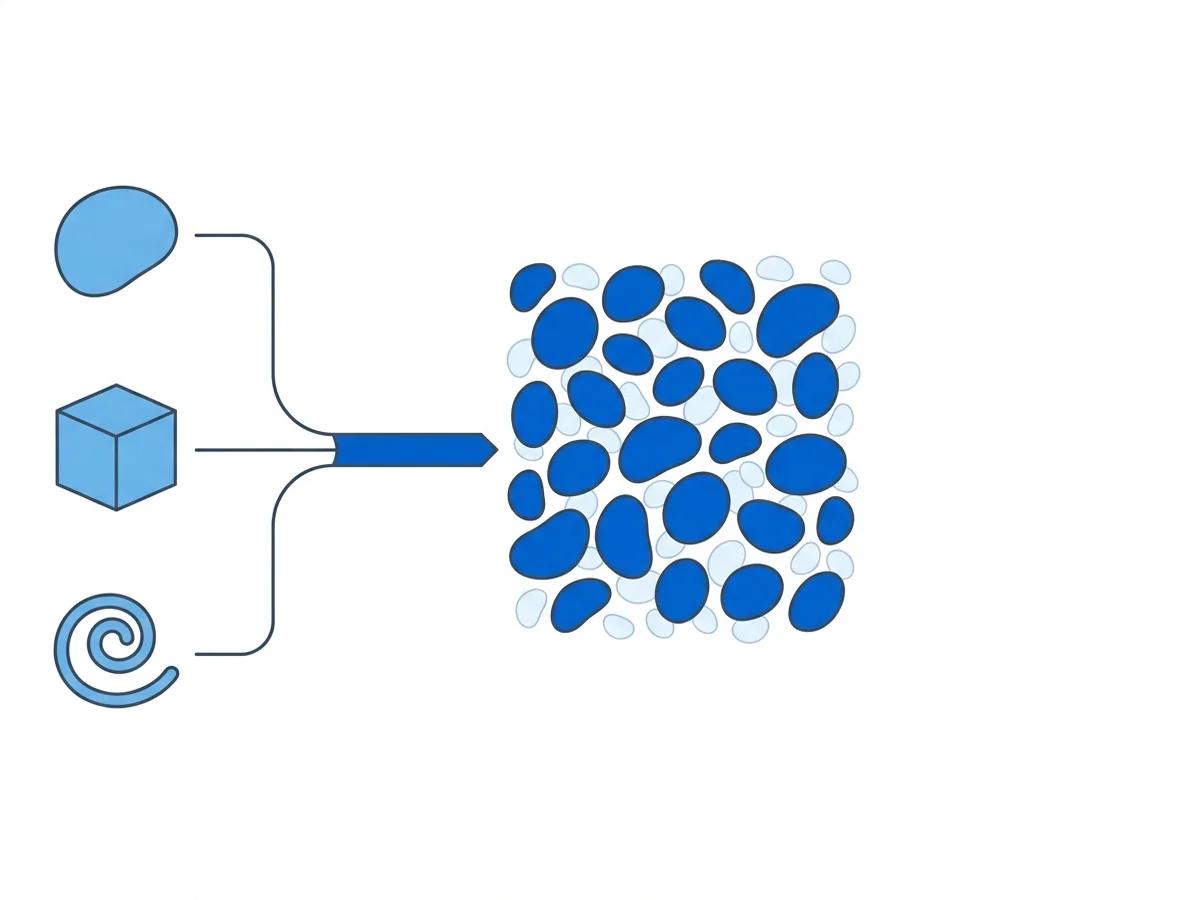
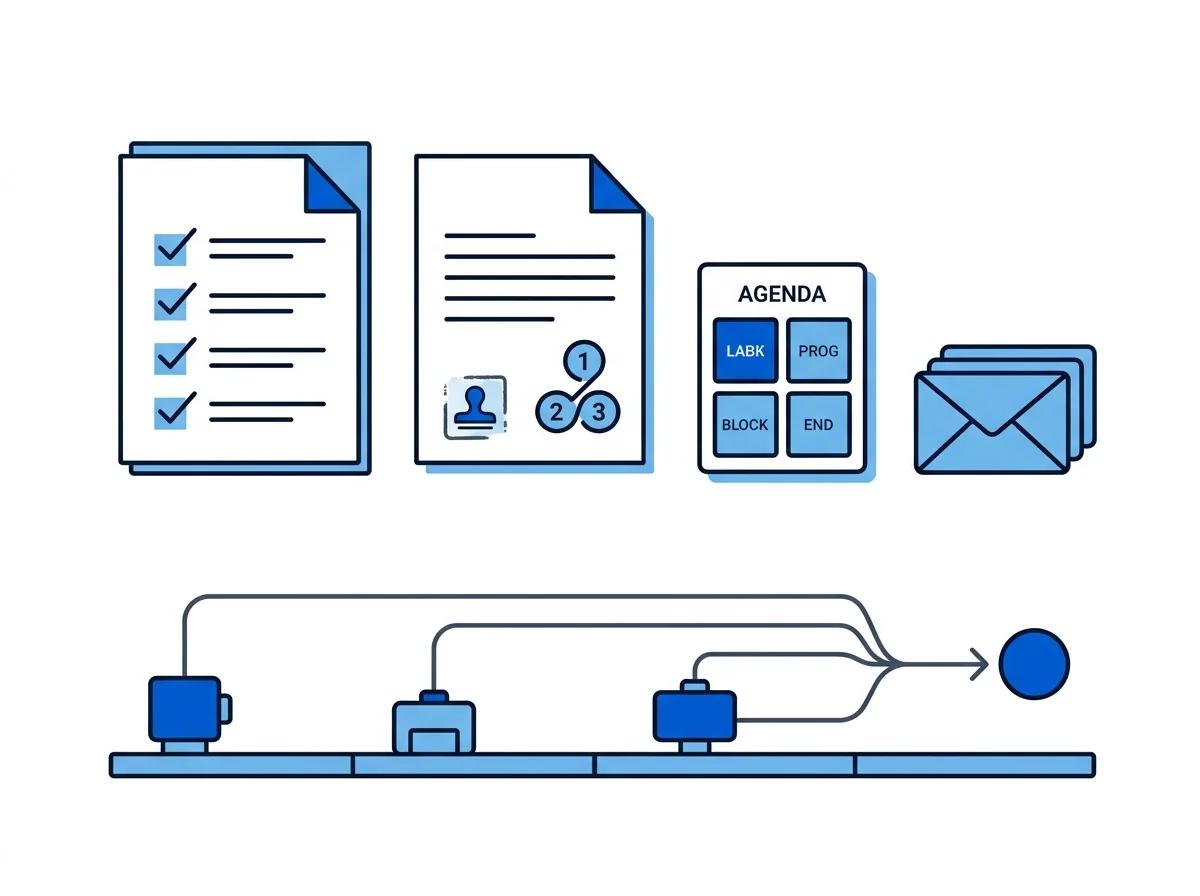
- "Fully automated" means end-to-end — tissue to sequencing-ready nuclei under one software-controlled workflow, not a single step automated with the rest handed back to the operator.
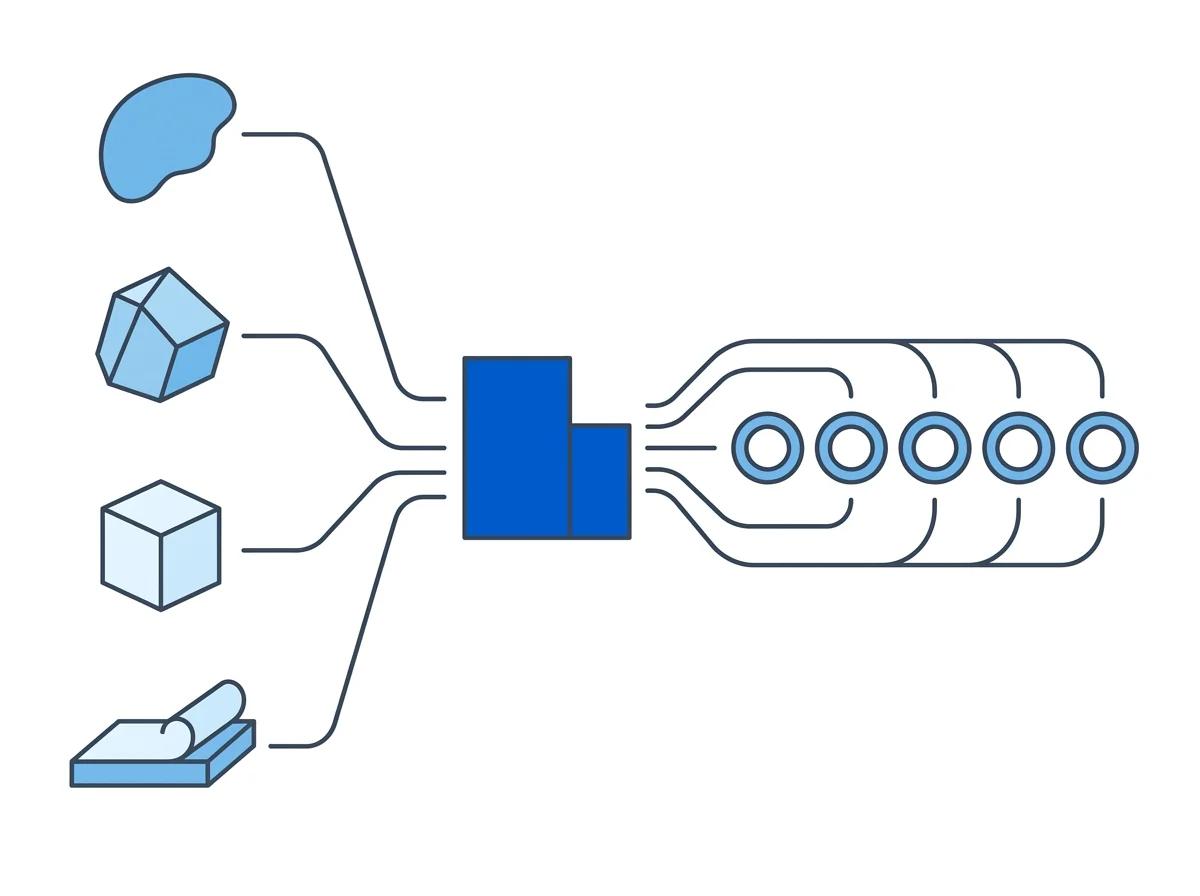
- One instrument, one process, across fresh, frozen, and FFPE — the gentle mechanical process is applied identically every run; the validated protocol changes with the tissue, the automation doesn't.
- FFPE is the proof — the Singulator 200+ is the first and only fully automated FFPE-to-nuclei platform: a 50 µm curl in, sequencing-ready nuclei out in 40–60 minutes, no xylene, no fume hood.
- The data runs across tissue types — ~100% nuclei integrity on frozen mouse cortex (Kersey et al. 2026) and identical FFPE replicates (1.0M / 1.0M) where the manual workflow swung 1.5M down to 0.4M.
Single-nucleus sequencing has standardized almost every step — the chemistry, the library prep, the bioinformatics pipeline. Almost. The one step that's still a manual craft in most labs is the one at the very front: getting clean, intact nuclei out of tissue.
And it's the same story whatever the tissue. Fresh, frozen, or FFPE, the published nuclei-isolation methods all lean on some flavor of hand-tuned workflow — a Dounce or Tween-based dissociation, a sucrose-gradient or column cleanup, a hand-pipetted filtration. Each manual step introduces operator variability. Each one is a failure mode for a sample you can't get back.
Every commercial nuclei-prep platform has handled this the same way: automate one part of the workflow and hand the rest to the operator.
The Singulator Platform automates the whole thing — tissue to sequencing-ready nuclei — under one software-controlled workflow, whether you start from a fresh biopsy, frozen brain, or an archival FFPE block. Same instrument. The same gentle mechanical process, applied identically every run. The validated protocol changes with the tissue; the automation doesn't.
That's the claim. Here's what's underneath it.
What "fully automated" rules out
The distinction matters because the nuclei-prep space is full of products that automate part of the job.
There are reagent kits that simplify a single step. There are semi-automated dissociators that handle tissue disruption but leave nuclei isolation manual. There are column-based cleanup kits. There are protocols that pair a partial automation with a manual finishing step.
Each automates a portion. None automate the workflow end-to-end.
What "fully automated" means specifically for the Singulator:
- Automated nuclei extraction — gentle mechanical lysis in a software-controlled, single-use cartridge, with no enzymatic 37°C digestion step
- Inline filtration — debris and ambient material removed before output
- Sequencing-ready output — a clean nuclei suspension, with no additional cleanup for most downstream workflows
- For FFPE, automated deparaffinization too — no xylene, no fume hood, no operator-controlled rehydration — the step that historically made FFPE the hardest input of all
Hands-on time per sample: about five minutes — a handful of pipetting steps, versus the couple of dozen a manual workflow runs. And the result is the same whether your senior postdoc runs it or someone six months into a rotation, because no one is making protocol decisions at the bench.
The hardest case proves the approach
If you want to know whether an automation claim is real or just marketing, look at how it handles the hardest input. For nuclei isolation, that input is FFPE.
FFPE is genuinely hard. Formalin cross-linking creates a protein matrix that's brittle, variable in penetration across a block, and chemically resistant to most gentle dissociation approaches. Workflows that run cleanly on fresh tissue scatter on FFPE.
So it's worth noting where the bar sits: the Singulator 200+ is the first — and currently the only — fully automated FFPE-to-nuclei platform on the market. A 50 µm curl in, sequencing-ready nuclei out in 40–60 minutes, no xylene, no fume hood, no histology training.
That matters less because FFPE is the point, and more because of what it proves. An automation approach that survives formalin cross-linking is one you can trust on fresh and frozen tissue without a second thought. The variability that breaks other approaches — enzyme batch-to-batch differences, operator-tuned digestion times, partial deparaffinization — is engineered out for every tissue type, not just the easy ones.
What the data shows — fresh, frozen, and FFPE
The evidence runs across tissue types, not just one.
Frozen tissue — independent, peer-reviewed
Kersey et al. 2026, in Cell Reports Methods, ran a head-to-head of three nuclei-isolation methods on frozen mouse cortex:
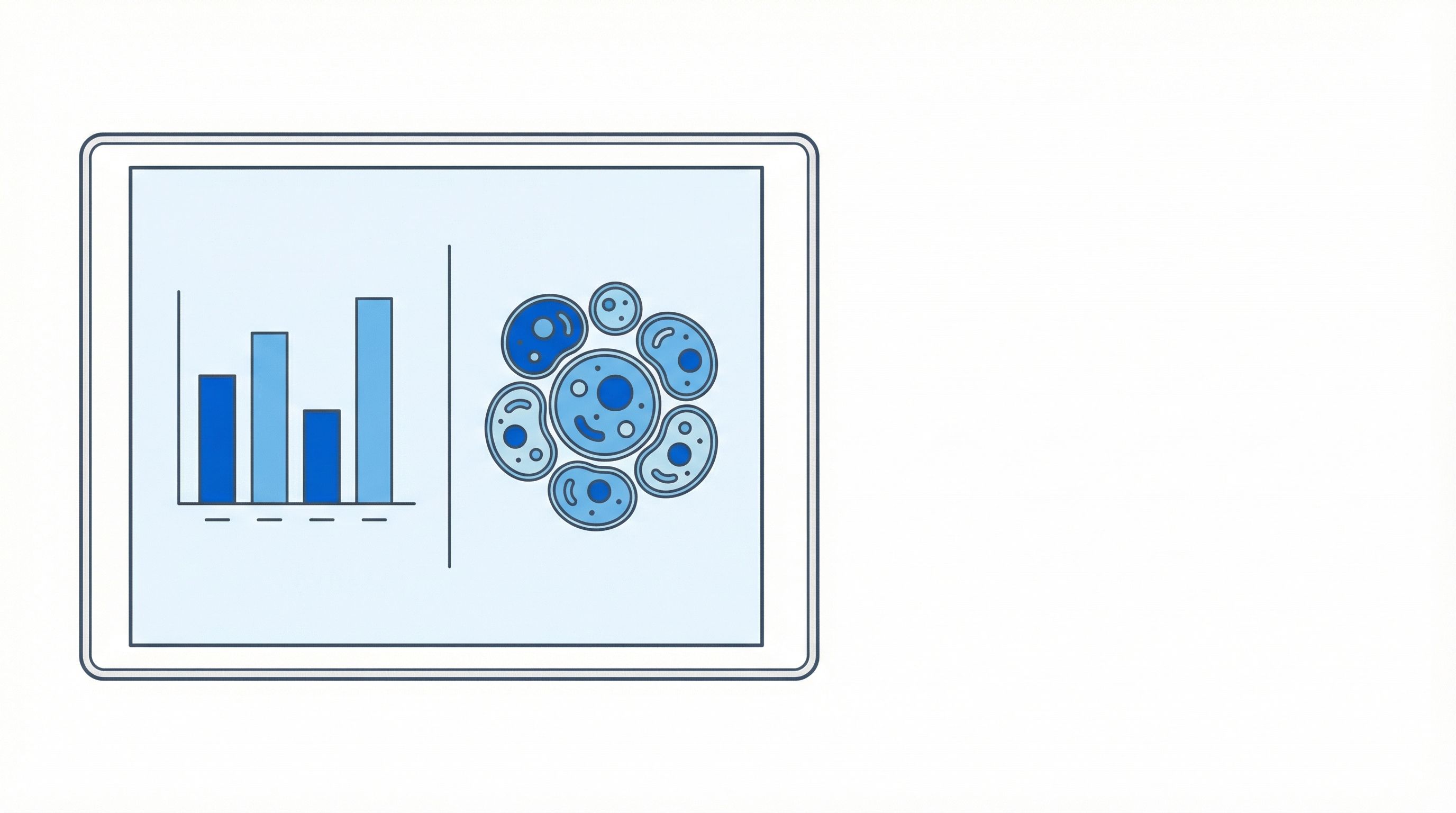
| Nuclei integrity | Result |
|---|---|
| Singulator | ~100% |
| Sucrose gradient (academic standard) | ~85% |
| Column-based kit | ~35% |
The Singulator method also showed the lowest ambient and mitochondrial RNA of the three — among the lowest ribosomal as well — at roughly 60,000 nuclei/mg, with the most consistent preservation of cell-type-specific and cell-state-specific markers across the methods compared. (Honest caveat: this is mouse cortex; human-postmortem translation should be caveated until a human head-to-head publishes. What translates is the mechanism — software-controlled mechanical lysis, no enzymatic 37°C step — which is independent of species.)
FFPE — PCS head-to-head
The PCS PDAC FFPE Application Note (December 2025) compared the Singulator 200+ against a manual column/dissociator-based workflow on the same mouse PDAC FFPE blocks:
| Replicate yield | Replicate 1 | Replicate 2 |
|---|---|---|
| Singulator 200+ | 1.0M nuclei | 1.0M nuclei |
| Manual workflow | 1.5M nuclei | 0.4M nuclei |
That's identical replicates from the Singulator against a near-fourfold swing by hand (1.5M down to 0.4M) — alongside an 81% reduction in hands-on time, and recovery of higher proportions of the ductal cancer cells and CAFs that define the PDAC tumor microenvironment, where the manual workflow skewed toward immune cells. Erythrocyte contamination was 1% versus 5% — five times cleaner.
Different tissues, same finding: the automation removes the operator variability the manual workflow can't.
What this means for your lab
Whatever you start with — a fresh biopsy, frozen brain, or an FFPE block banked years ago for a different purpose — nuclei isolation stops being the variable step in your workflow. It becomes a dependable instrument step that produces the same result run to run, operator to operator.
On capacity, the Singulator is on par with the semi-automated workflows most labs weigh it against: about 96 samples a day for fresh and frozen, and about 16 a day on the fully automated FFPE cycle. When you need more, you add an instrument, not a specialist — one operator runs several in parallel, and because the protocol is identical across them, the data is comparable by design.
The prep used to be the one step you couldn't standardize. Now it's the one you don't have to think about. The same is true at the other end of the input range: when the tissue you have is scarce, the lowest input the platform can run becomes the gating spec — another place the same automation does the work.