The Core Director's Standardization Field Guide
A practical playbook for delivering one standard of single-cell sample prep across every operator, every shift, and every sample type your core takes in. Your intake queue changes every day. Your prep quality shouldn't.
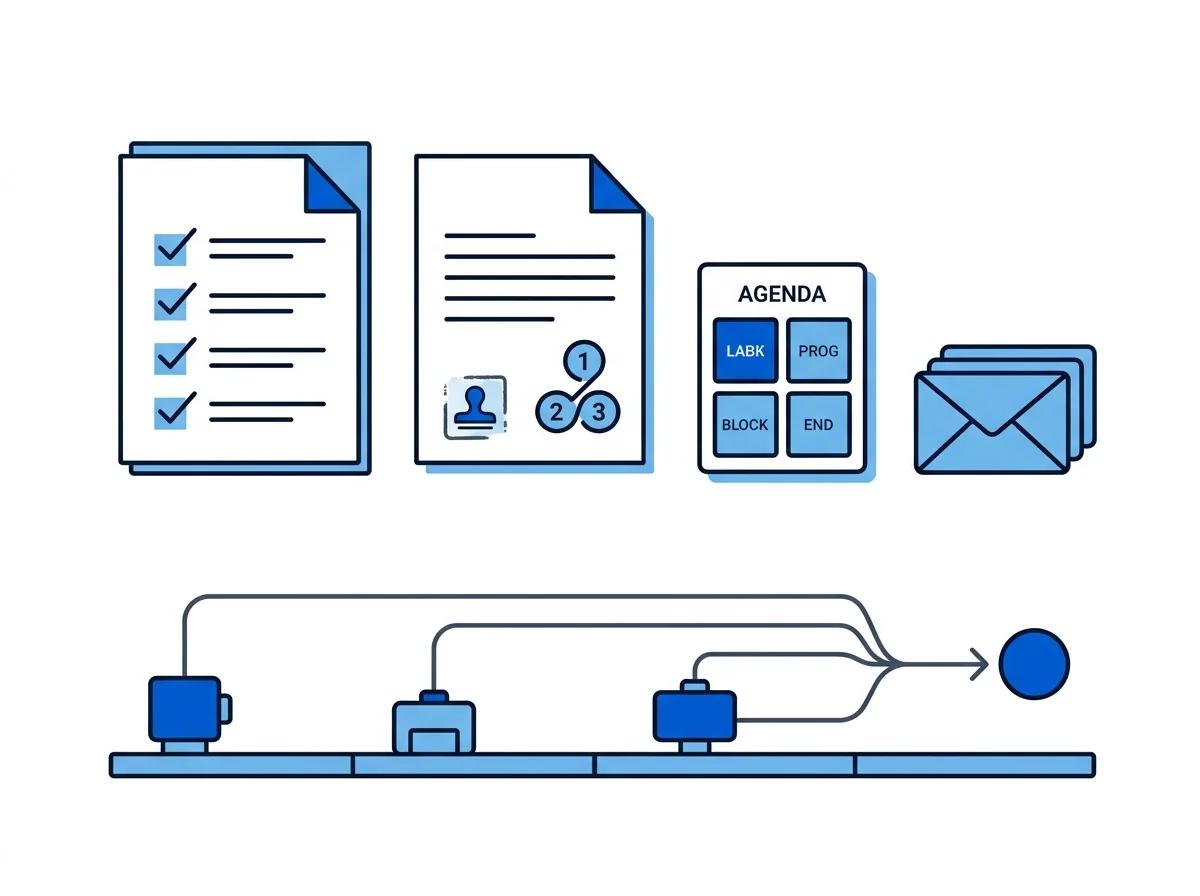
- A 10-point standardization self-assessment to score where your core actually stands — and locate where prep quality depends on a person rather than a process.
- A six-stage SOP and validation framework you can adopt for any sample type, on any instrument, manual or automated.
- A half-day workshop outline to bring your operators, your lead scientist, and your documentation to one standard in a single afternoon.
- Three ready-to-send director-to-PI email templates for the conversations standardization actually depends on, plus the independent and applied data behind every claim.
Your sequencer is not the variable you lose sleep over. You have characterized it, you trust it, and a failed run usually traces to something that arrived before the library ever hit the instrument.
In a shared single-cell genomics core, the front of the workflow is the part you control least, because it depends on who is at the bench that morning. A brain block from one PI, a frozen tumor from another, an FFPE curl from a third, each handled by whichever operator is on shift, each judged by a standard that lives in someone's hands rather than in a document. This guide treats standardization as an operational program you run, and gives you four tools you can use this week to build it.
01 · The one step your core controls least
Sample prep is the most variable step in the single-cell workflow. It is true for bulk and single-cell work alike, and it is the step a core controls least because technique travels with people. When the scientist who wrote the protocol is at a conference, the sample a PI already committed to gets run by someone newer, and the result can shift in ways no downstream analysis fully recovers. Ambient RNA, doublet rates, and lost rare populations are set upstream. They are rarely rescued downstream.
Standardization is a property of how the prep step is designed. You build it in; you do not bolt it on after the run.
This guide gives you four things you can use this week: a self-assessment to score where your core stands, an SOP and validation framework to lock prep quality in place, and a workshop outline to bring your whole team to one standard. It also gives you email templates to take the case to the PIs and the institutional committee that funds your instruments. It assumes no purchase. The framework holds whether your prep is manual, semi-automated, or fully automated. Where automation changes the math, we say so plainly and show the evidence.
Read it in about ten minutes for the framework, or work through the assessment and templates over an afternoon with your team. The sections build on each other: diagnose where your variability lives, build the framework that removes it, apply it across your intake range, align your team, make the case to your PIs and committee, and stand it all on the evidence.
02 · The standardization self-assessment
Most cores know they have prep variability. Fewer have located it. Work through these ten questions as the core director, ideally with your lead operator in the room, and answer for the core as it runs on an average week, not on its best day. Score one point for each yes. Each "no" is a place where prep quality depends on a person rather than a process.
- A written, version-controlled SOP exists for every sample type you accept. Not a protocol in a notebook. A document with a version number that an auditor could read.
- A new operator can reach release-quality prep without shadowing your senior scientist for weeks. If onboarding depends on one person's availability, your standard lives in their hands.
- Two operators running the same sample type on the same day produce comparable inputs. Have you ever actually run this as a check? Most cores have not.
- Every run leaves a record of what was done, by whom, and under what conditions. Timing, temperature, reagent lot, operator. Reconstructable months later.
- You can hand a PI documented provenance for the prep behind their dataset. The reproducibility section of their methods, and your S10 case, both depend on this.
- Prep quality holds when your most experienced operator is out for two weeks. The vacation test. This is where most "we already get great results" cores break.
- You handle fresh, frozen, and archival tissue to one consistent quality standard. Or does FFPE quietly route to a fume hood and a different person's judgment?
- You can process a precious, low-input specimen without a high risk of losing it. Needle biopsies and rare tissue are the samples a failed prep costs the most.
- You track downstream failures back to a prep cause, not just a sequencing symptom. If you cannot attribute failures, you cannot tell whether standardization is working.
- Your prep standard would survive the planned or unplanned departure of any one person. The honest version of question 6, applied to the whole team.
Your core runs a mature prep program. Use the rest of this guide to harden documentation and close the one or two gaps that remain, and to make your standardization legible to the committee that funds you.
You have real practice but it lives partly in people, not process. This is the most common and the most fragile position. The SOP and validation framework in Section 3 is built for exactly this gap.
Your prep quality is operator-defined today. That is a normal place to start and a solvable one. Work the framework end to end, run the workshop in Section 4, and use the templates in Section 5 to bring your PIs along.
The questions you answered "no" are your standardization backlog. The next three sections work through them in order: build the framework, apply it across your intake range, and align your team.
03 · An SOP and validation framework for any sample type
A standardization program is a loop you keep running. You define the standard, qualify the people and the method against it, run with a record, monitor for drift, and re-qualify when something changes. The six stages below are method-agnostic. They apply whether your prep is manual, semi-automated, or fully automated, and they map directly onto the documentation an S10 reviewer, an IRB, or an NIH Data Management and Sharing Plan will ask you to produce.
-
Define the standard, per sample type
Write down what "good" means before you defend it. For each sample type you accept, specify the acceptance criteria: target yield range, viability or structural-integrity threshold, contamination ceiling, and the input range you will accept. Name the conditions that must hold every run: timing, temperature, chemistry, and the cartridge or consumable used.
- One acceptance sheet per sample type, version-controlled.
- Criteria stated as ranges with a pass or fail line, not adjectives.
-
Lock the method so conditions do not drift with the operator
The single biggest source of prep variability is the part of the method that lives in technique: buffer prep, transfer timing, trituration force, filtration. The goal of this stage is to remove judgment from those steps wherever you can. Software-controlled protocols hold timing, force, temperature, and chemistry identical from one run to the next because they are set in software. Where steps stay manual, fix them with a checklist and a timer, and replace any "to taste" instruction with a specified value.
-
Qualify every operator against the standard
Treat operator qualification the way a GMP lab treats it: a defined competency run, scored against the acceptance criteria from Stage 1, before that person runs live samples unsupervised. The bar is whether the prep met the numbers, documented. A senior scientist signing off by watching does not clear it. Re-qualify on a schedule and after any method change.
- A pass is meeting the Stage 1 criteria, documented, not a supervisor's impression.
- Keep a competency log per operator per sample type.
-
Capture a record on every run
If a run is not recorded, it cannot be audited, attributed, or reproduced. Capture what was done, by whom, and under what conditions: operator, timing, temperature, reagent lot, and result. A native digital run log writes this automatically on every run, which is the difference between provenance by default and provenance you reconstruct from memory under deadline. This record is the raw material for the PI's methods section, your IRB file, and your S10 utilization case.
-
Monitor for drift
Standardization is a state you maintain, not a milestone you pass. Trend your acceptance metrics across operators and over time. When two operators diverge on the same sample type, or when results creep across reagent lots, you want to see it in the data before a PI sees it in a failed downstream run. Tie every downstream failure back to a prep cause where you can. The metric that matters is sample-to-sample variability across operators, not the best result any one operator can produce.
-
Re-qualify when anything changes
A new operator, a new reagent lot, a new sample type, a new instrument: each is a trigger to re-run the relevant qualification, not an exception to wave through. Close the loop back to Stage 1 and update the acceptance sheet and the version number. A standard that is never revisited is a standard that quietly decays.
Manual prep is operator-dependent by nature. As an SOP passes from person to person, protocol drift and "magic hands" creep in. Moving the timed, force-controlled, temperature-controlled steps off the bench is what lets the rest of the framework hold. The Singulator is one way to lock Stage 2: it runs software-controlled, cold, enzyme-free protocols on enclosed single-use cartridges, with a native digital run log on every run, so the timing, force, temperature, and chemistry stay identical whoever is on the bench. Among the ways to standardize, it removes the most operator judgment from the steps that carry the most variability.
What the evidence says standardization is worth
The published and application data below show what happens to reproducibility when the timed, force-controlled, temperature-controlled steps come off the bench. These are the numbers to put in front of a skeptical PI or a grant reviewer; Section 7 sources every one of them.
04 · One standard across every sample your core sees
A multi-user core's hardest standardization problem is breadth.
A single-PI lab running one sample type can standardize through repetition. A shared core cannot, because every shift brings a different tissue from a different PI with different downstream plans. The acceptance criteria differ by sample type, but the framework does not. Define the standard per type, qualify operators per type, and you can say yes to a wider intake without standing up a separate method, a separate operator, and a separate quality bar for each one.
| Sample type | The standardization risk | Where the framework focuses |
|---|---|---|
| Fresh tissue, cells | Trituration force and dissociation timing vary by hand; fragile populations shear. | Lock force and timing in Stage 2; qualify on a recovery and viability range in Stage 3. |
| Frozen tissue, nuclei | Lysis conditions and ambient RNA shift with technique and temperature. | Hold temperature and chemistry in Stage 2; monitor mitochondrial and ambient signal in Stage 5. |
| OCT-embedded | Embedding-medium carryover and inconsistent handling. | Standardize the handling steps; record lot and conditions in Stage 4. |
| FFPE, archival | Manual xylene deparaffinization adds an operator-dependent, fume-hood-bound step. | Remove the manual step where possible; define block-quality criteria before committing a curl. |
Fresh and frozen, cells or nuclei, to one standard
Across fresh, frozen, and OCT tissue, the variability you most want to remove is the timed, force-controlled, temperature-sensitive handling. Cold, enzyme-free chemistry matters here for a documented reason: enzymatic dissociation at 37 °C can induce artifactual stress-response and microglial-activation signatures (Marsh et al., 2022). In brain work a gentle, cold prep protects real biology from a handling artifact. The Singulator runs these protocols software-controlled and validated across a broad range of tissue types, so a wide intake meets one quality bar rather than one bar per operator.
Archival tissue, on equal footing
FFPE is one of the sample types a standardized core handles, on equal footing with fresh and frozen, not a special case routed to a fume hood and a different person's judgment. The risk it adds is the manual deparaffinization step. On the Singulator 200+, that step is automated: deparaffinization to nuclei from a 50 µm curl in about 60 minutes, xylene-free, with less than 5 minutes hands-on and four pipetting steps. In a head-to-head against a manual FFPE workflow on a mouse PDAC block, the automated prep delivered 86% fewer pipetting steps, four against 28, and 1% versus 5% erythrocyte contamination (PCS FFPE Application Note, Dec 2025).
Block-to-block variability is real and no instrument erases it. What standardization removes is the operator-added variability layered on top: handling, timing, technique. For severely degraded archival material, the right move is a quick block-quality check before committing a precious curl, and PCS applications can help you set those criteria.
The smallest sample you have
Needle biopsies, rare tissue, and limited clinical specimens are the samples a failed prep costs the most, because there is no second aliquot. The Singulator is validated for inputs as low as 2 mg and 50 µm FFPE curls, with quality preserved by cold, gentle, enzyme-free chemistry and short run times. The 2 mg figure is the non-FFPE input; the FFPE path is the curl, on the Singulator 200+. For any new low-input tissue, the recommended path is the same as the framework: a quick QC check against your own baseline before it goes live.
The wider your intake, the more standardization is worth, and the more it has to live in the method rather than in any one operator. One platform for every sample your core sees works through the versatility case in full.
05 · A half-day standardization workshop
A framework on paper standardizes nothing until the team builds it together. This workshop is designed for a core director to run with the operators and lead scientist in roughly three to four hours. The output is a first draft of your acceptance sheets, a competency-test design, and an honest list of where prep quality still depends on a person.
| Block | Time | What you do | What you leave with |
|---|---|---|---|
| 1. Locate the variability | 45 min | Walk the self-assessment from Section 2 as a group. Map every "no" to a specific sample type and step. Have each operator describe how they actually run the most common prep, out loud, and note where their descriptions diverge. | A ranked list of where prep quality depends on a person. |
| 2. Define the standard | 60 min | For your top two or three sample types, draft the Stage 1 acceptance sheet together: yield range, integrity or viability threshold, contamination ceiling, input range, and the conditions that must hold every run. | Draft acceptance sheets, version 0.1, for your highest-volume sample types. |
| 3. Design the qualification | 45 min | Turn each acceptance sheet into an operator competency test. Decide what a pass looks like in numbers, how often you re-qualify, and what record you keep. Assign who qualifies whom. | A competency-test design and a re-qualification schedule. |
| 4. Close the loop | 30 min | Decide how you will record every run, how you will trend drift, and how you will attribute downstream failures back to prep. Agree the one change you will make this month. | A monitoring plan and one committed next action. |
The most valuable moment is usually Block 1, when two experienced operators discover they have been running "the same" protocol differently for a year. That divergence is the variability the framework exists to remove, not a failure of your people. Name it without blame and the rest of the workshop runs itself.
If automated prep is on your roadmap, Block 2 is the natural place to bring PCS applications in: the acceptance criteria you draft give a PCS specialist the targets to talk through with you. That is the bridge from this workshop to the conversation at the end of this guide.
06 · Director-to-PI email templates
Standardization is a core-wide decision, and the people who fund and use your instruments need to hear it in their terms. The PI cares about the integrity of their dataset. The institutional committee cares about utilization, provenance, and the capital case. The bench operator cares about a method that does not change run to run. Below are three templates, written in a peer-scientist voice. Fill the bracketed fields and send.
SubjectOne standard behind every dataset from the core
Hi [Name],
As we take on more single-cell projects across the core, I want to make sure the prep behind your data holds to one standard regardless of who runs it. The sample prep step is the most variable part of the single-cell workflow, and it is the part that sets ambient RNA, doublet rates, and rare-cell capture before anything reaches the sequencer.
We are standardizing prep so that every project, including yours, meets the same quality bar across operators and sample types, with a documented record on every run that you can cite directly in your methods. For your [tissue type] work specifically, that means [the acceptance criterion that matters most to them, e.g. consistent nuclei integrity and low ambient signal].
Happy to walk you through the standard and what it changes for your next submission. Would [day/time] work?
Best,
[Your name]
SubjectStandardizing the most variable step, and documenting it for the S10 case
Hi [Name],
I want to flag an investment that strengthens both our service quality and our next instrumentation grant. The front end of the single-cell workflow, sample prep, is the most variable step and the one our core controls least, because it depends on the operator. Standardizing it does two things the committee cares about: it raises the success rate of expensive downstream runs across every PI we serve, and it produces documented provenance on every run.
That provenance maps directly onto what reviewers and policy now expect. A native digital run log per run aligns with the NIH Data Management and Sharing Policy and with ABRF reproducibility framing, and it makes the utilization and reproducibility sections of an S10 application write themselves.
I have a short framework and the supporting data I would like to bring to [the next committee meeting / your office]. Could we find [day/time]?
Best,
[Your name]
SubjectFollowing up on prep consistency for your project
Hi [Name],
You mentioned that [senior operator] already gets excellent prep for your samples, and that is true. The standard we are building keeps that expertise and extends it to the day that person is on vacation, at a conference, or has moved on, and a sample you have already committed to gets run by someone newer.
Standardizing prep encodes your best operator's standard into a method that runs the same way whoever is at the bench. That is resilience for your timeline. It also means the prep behind your published data does not depend on one person staying in the building.
I would value 15 minutes to show you what that looks like for your [tissue type] work. Does [day/time] suit?
Best,
[Your name]
Lead with the reader's job: the PI's data integrity, the committee's capital case, the operator's stable method. The instrument is the means, never the headline. The same objection a skeptical PI raises is answered in full in Will one instrument really standardize prep across every operator you have?
07 · What independent and applied data show
Standardization claims earn their place in life sciences only with data. These are the proof points behind this guide, drawn from third-party publications and PCS application studies. State the conditions and the n when you use them.
Third-party, peer-reviewed
- Nuclei integrity and variability. About 100% structurally intact nuclei from the Singulator versus about 85% for a sucrose gradient and about 35% for a column kit, in frozen mouse cortex; under 0.5% mitochondrial reads, with the lowest sample-to-sample variability of any compared method, and among the lowest ribosomal (Kersey et al., 2026, Cell Reports Methods).
- A spatial and multi-omics core at scale. The Yale Center for Genome Analysis runs scRNA-seq, snRNA-seq, ATAC-seq, CITE-seq, and FACS off one Singulator footprint, a working example of breadth held to one standard.
- Confirmation in a published spatial study. Singulator snRNA-seq identified the same major cell types as Xenium and resolved immune differences that spatial methods alone could not (Haviv et al., 2024, Nature Biotechnology).
- Why gentle, cold prep matters. Enzymatic dissociation at 37 °C can induce artifactual stress-response and microglial-activation signatures, context for why a cold, enzyme-free method protects real biology in brain (Marsh et al., 2022, Nature Neuroscience).
PCS application data
- Replicate consistency. Identical replicate yield, 1.0M against 1.0M, where a manual workflow swung close to four-fold, 1.5M against 0.4M; n = 4, single mouse PDAC block (PCS FFPE Application Note, Dec 2025).
- FFPE head-to-head against manual. 81% less hands-on time, under 5 minutes against 25; 86% fewer pipetting steps, four against 28; 1% versus 5% erythrocyte contamination (PCS FFPE Application Note, Dec 2025, mouse PDAC FFPE).
- Hands-on reduction versus manual dounce. 15 manual steps reduced to 2 hands-on steps, 81% less hands-on time (PCS workflow comparison).
- Throughput. On par with established semi-automated methods, without the manual technique they require.
The structural-integrity and variability data above are on the nuclei workflow. A correctly-attributed third-party cell-recovery figure is being confirmed with PCS, so this guide states the cell side qualitatively rather than putting a number to it. The exact tissue-type count is being confirmed with PCS before it is stated as final. We would rather flag a gap than fill it.