 Field Guide
The 21 CFR Part 11 Cell-Counter Evaluation Checklist
A practical one-page scoring tool to evaluate cell counters against 21 CFR Part 11.

 Field Guide
A practical one-page scoring tool to evaluate cell counters against 21 CFR Part 11.
 Blog
BlogThe compliance explainer: what 21 CFR Part 11 actually demands of a cell counter — audit trail, e-signature, access control, and a Secure Mode.
 Field Guide
An educational field guide to the audit-ready framing and the five requirements of a count you can defend.
 Blog
BlogA demand-creation reframe: in GMP cell therapy, the cell count can function as a release assay — and what that shift means for how you count and prove it.
 Blog
BlogThe evergreen guide to what makes a GMP cell-therapy count audit-ready — the hub for the Part 11 and volumetric-vs-image explainers.
 Blog
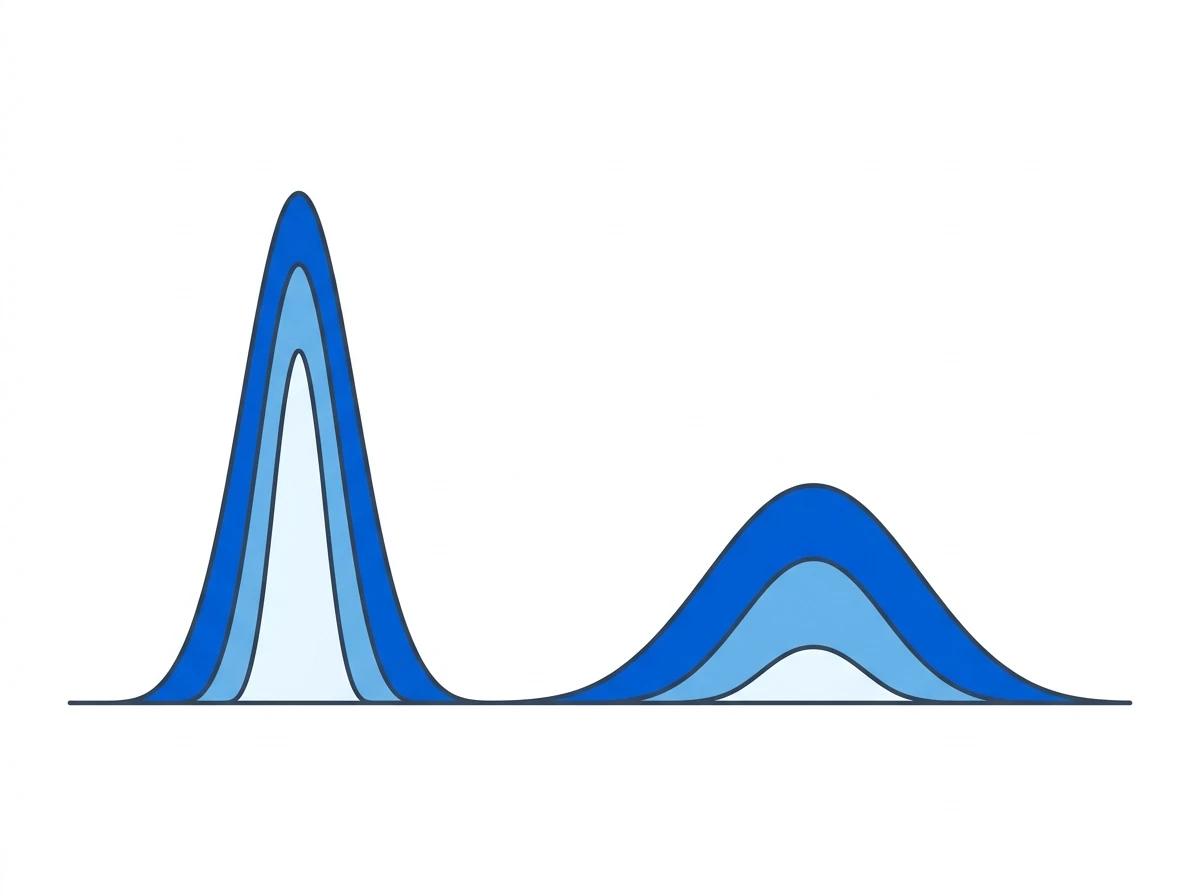
BlogThe method explainer: volumetric vs image-based counting for CAR-T QC, and why the CV gap matters at lot release.
 Field Guide
Every hour spent optimizing viability dye concentrations is an hour not spent on your actual experiments. It's optimized for use - that's the important thing. You don't have to optimize it as a customer. Pre-optimized viability reagents eliminate the titration experiments, the incubation testing, the cell-type-specific protocol development. Why spend time optimizing when validated performance is available from the first use?
Field GuideMost of the issue with viability reagents is that most people don't even know they exist. If you're running viability assays on Moxi V or Moxi GO II with generic dyes you optimized yourself, there's a better option you may not have heard about: pre-optimized, ready-to-use viability reagents designed specifically for your instrument. Now you know.
Field GuideSearching for viability protocols, adapting literature methods, trial-and-error until something works - this is time you don't need to spend. The user manual is designed to be super easy. Concentration-based instructions tell you exactly what to do: put X amount of viability reagent and put X amount of sample, incubate and go. No protocol hunting required.
Field GuideThat's why people - including me - just buy premixed gel loading dye and don't make my own from powder like my PI wanted me to. The same logic applies to viability reagents. Buy the damn gels rather than making them - consistency and data. When convenience and consistency matter more than tradition, pre-made beats DIY.
Field GuideUsing an aperture much larger than necessary reduces sizing resolution by creating smaller signal differences between cell sizes. Cell populations that should be distinguishable appear merged when the aperture is too large for the cells being measured. Target 15-40% of aperture diameter for optimal resolution. If you're counting lymphocytes on M+ cassettes because it works, you're sacrificing the sizing resolution that S+ cassettes would provide.
Field GuideWhen you make your own viability reagents, every batch is different. When you buy pre-optimized reagents with QC'd lot consistency, every lot performs the same. Long-term experiments need long-term consistency - and that consistency comes from manufacturing quality control, not from hoping your technique stays identical over months of work.
Field GuideThe 15 μm boundary provides clear selection criterion: cells under 15 micrometers use S+ cassettes, cells over 15 micrometers use M+ cassettes. This boundary isn't arbitrary - it's where each aperture size achieves the optimal 15-40% cell-to-aperture ratio for signal quality and sizing resolution. Know your cell size, follow the boundary, and cassette selection becomes automatic.
Field GuideTIL counting and immune cell killing assays are immediate applications for dual-cassette workflows. Cancer cells are large, T cells are small - no single cassette optimizes both. Run S+ for accurate T cell counts, M+ for accurate tumor/target counts. The extra run takes minutes but delivers publication-quality E:T ratios and killing percentages.
Field GuideNew lab members need to generate valid data quickly. Teaching protocol optimization takes weeks. Teaching protocol execution takes minutes. The user manual is designed to be super easy - put X amount of viability reagent, put X amount of sample, incubate and go. When reagents are pre-optimized, training focuses on execution, not development.
Field GuideSmall cells measured through oversized apertures generate weak electrical signals that fall below detection thresholds or get confused with debris. If you're counting lymphocytes, PBMCs, Jurkat cells, or any suspension lines under 15 micrometers with the wrong cassette, you're likely undercounting. Switch to S+ cassettes where the smaller aperture ensures your small cells generate strong, detectable signals clearly distinguishable from noise.
Field GuideLarge cells approaching the aperture diameter create artificially high signals and risk clogging the sensing orifice. Clogging interrupts runs, wastes samples, and requires cassette replacement mid-experiment. For adherent cell lines like CHO, HEK293, and HeLa, and for primary tissue cells over 15 micrometers, M+ cassettes provide the larger aperture necessary to prevent physical blockage.
Field GuideWhen your sample contains both small and large cells, no single cassette optimizes measurement for both populations. The solution: run the same sample twice - once with S+ to get accurate small cell counts, once with M+ to get accurate large cell counts. This dual-cassette workflow delivers accurate data for both populations rather than compromised data for everyone.
Field GuideCoincidence - multiple cells in the aperture simultaneously - causes two cells to be counted as one, corrupting both count and size data. Optimal aperture utilization means targeting 15-40% of aperture diameter so cells generate strong signals while avoiding coincidence artifacts. Match your cassette to your cell size, stay within concentration guidelines, and coincidence becomes a non-issue.
 Protocol
Nuclei counting protocol for Moxi V
ProtocolViability staining protocol for Moxi V
ProtocolValidation check protocol for Moxi V
ProtocolWBC Counting Protocol for Moxi Z
ProtocolThis protocol describes an approach to achieve rapid, highly-accurate nuclei / nucleated-cell counts by first lysing the cells to isolate the nuclei, labeling the nuclei with PCS Viability Reagent, and counting using the Moxi GO II system
ProtocolSystem Check Bead Protocol for Moxi Z
ProtocolThis protocol describes how to stain with both propidium iodide and acridine orange. It also explains how to use compensation settings on the Moxi GO II
ProtocolThis protocol outlines a standardized dual-staining workflow for the Moxi GO II to simultaneously quantify apoptosis and viability using FITC-Annexin V and concentrated PCS Viability Reagent.
ProtocolThis protocol outlines a dual-staining procedure using Calcein-AM and Propidium Iodide on the Moxi GO II to simultaneously assess cellular membrane integrity and metabolic vitality for a comprehensive evaluation of cell health.
ProtocolThis protocol details the standardized preparation, blocking, and immunolabeling of single-cell suspensions using either direct or secondary antibody staining workflows optimized for high-resolution population analysis on the Moxi GO II flow cytometer.
ProtocolThis protocol provides step-by-step instructions for preparing, running, and gating validation check beads to verify the sizing, concentration, and fluorescence accuracy of the Moxi GO II instrument
ProtocolThis document provides a detailed protocol for isolating, stimulating, fixing, permeabilizing, and intracellularly immunolabeling white blood cells from whole blood samples for analysis on the Moxi GO II.
ProtocolThis document provides a step-by-step protocol for measuring oxidative stress in living cells by detecting reactive oxygen species (ROS) using the CellROX Green assay on the Moxi GO II.
ProtocolThis document provides a step-by-step protocol for immunolabeling the surface of white blood cells while effectively eliminating red blood cell interference through lysis and optional buffy coat isolation for analysis on the Moxi GO II.
 App Note
Peer-reviewed concordance data showing the Moxi GO II consolidates cell counting, sizing, viability, and 2-color immunophenotyping into a single 15-second, at-bench measurement for CAR-T expansion monitoring — replacing the standard two-instrument core-lab workflow. In a University of Pennsylvania study (Pajarillo et al., Cytotherapy 2024), the Moxi GO II matched gold-standard reference instruments for viability (r² = 0.97), CD4+ T cell identification (r² = 0.997), and CAR19 transduction efficiency (r² = 0.90), eliminating the 3–6 hour turnaround for routine expansion checkpoints. For Research Use Only.
 Ebook
EbookThe debris problem: Membrane fragments, aggregates, media residue, and lysed cell debris are present in virtually every biological preparation. How does your counting method distinguish a cell from a piece of debris?
 Publication
In this study, the authors used a Moxi Z Cell Counter to count trypsinized, treated PANC-1 cells so they could re-plate defined cell numbers for colony formation assays and accurately calculate plating efficiency and survival fraction after PAA-TiOx nanoparticle and X-ray treatments under normoxic and hypoxic conditions.
PublicationThe authors used a Moxi Z to count cells as part of preparing mammalian cell cultures for in vitro nanovanilloid testing (viability/oxidative-stress assays and TRPV1 calcium-influx imaging).
PublicationIn this study, the authors used the Moxi GO II to quantify endothelial apoptosis after Hif2α siRNA knockdown and hypoxic exposure, using Annexin V–FITC and PI with the instrument’s apoptosis app to measure cell-death outcomes under their ischemia-relevant conditions.
PublicationIn your staged partial-dissociation retinal organoid workflow, you used the Moxi Go II to count the filtered dissociation-fraction cell suspensions immediately before 10x Chromium X scRNA-seq loading (targeting ~8,000 cells per sample), enabling consistent single-cell capture across fractions and lines.
PublicationThe authors used a Moxi V to measure Aspergillus niger spore concentration, enabling per-10^6-spore normalization of downstream plate-reader GFP fluorescence when comparing transformants across binary vector ORI variants.
PublicationThe authors used the MOXI Z Mini to count and standardize 50,000 NIH3T3 cells per condition immediately before ATAC-seq library preparation, supporting their chromatin-accessibility comparisons at the Actg2 locus across RNA-destabilizing perturbations.
PublicationThe authors used a Moxi Z to count isolated bovine PBMCs after density separation and washes, then normalized each sample to ~2×10^7 cells per tube prior to RNAlater stabilization and downstream bulk RNA-Seq.
PublicationThe author used a platelet–fibroblast co-culture model, and a Moxi-Z Coulter-based cell counter to quantify RPC-C2A fibroblast cell numbers after UVC injury and platelet/lysate treatment and to normalize fibroblast-associated ATP measurements to cell count, supporting your survival and bioenergetic conclusions.
PublicationThe authors used a Moxi GO II to perform fluorescence-based flow cytometric phenotyping of BM-derived cultures (CD45 and intracellular RUNX2/BAP) to verify the osteoblastic differentiation context for interpreting downstream α-radiation–responsive omics measurements.
PublicationIn this study, the authors used the Moxi GO II to run a FITC-based apoptosis assay on treated prostate cancer cells (±5-ALA, ±irradiation) and quantify early apoptotic fractions as a mechanistic readout of radiosensitization.
PublicationThe authors used a Moxi cell counter (Orflo, S cassettes) to quantify the live, post-FACS-sorted MOE single-cell suspension and dilute it to ~1000 cells/µL for 10x Genomics single-cell RNA-seq loading.
PublicationIn this study, the authors used a Moxi Z to quantify H. akashiwo cell-density changes in phosphate-depleted co-cultures and a Moxi Go II Mini to measure CellTracker™ Green–labeled bacterial fluorescence associated with algal-sized, red-autofluorescent particles as evidence of bacterivory linked to growth rescue under phosphate limitation.
PublicationIn this study of Naegleria’s mitotic vs differentiation microtubule programs, the authors used a Moxi Z impedance-based counter to quantify amoeba concentration so they could inoculate and grow cultures at defined densities before initiating the mitotic synchronization workflow.
PublicationIn this study, the authors used a Moxi GO II (561 nm LP filter) to quantify TMRM fluorescence in PBMCs and calculate inhibitor-dependent shifts in the fraction of TMRM-positive cells as a small-sample, intact-cell readout of mitochondrial membrane potential (∆Ѱm) and Complex V operating mode.
PublicationThe authors used an ORFLO Moxi Mini to count viable cells after irradiated MRC5-hTERT and HCT116 pellets were re-plated and expanded for 5–6 days, using the averaged viable-cell counts (normalized to same-day non-irradiated controls) as the viability endpoint to compare inter-pulse timing conditions.
PublicationThe authors used a Moxi Z to count trypsinized vascular smooth muscle cells after a 3-day antiviral treatment, providing the primary quantitative endpoint for proliferation in their remdesivir vs. molnupiravir/nirmatrelvir comparisons.
PublicationThe authors used a Moxi Z (Type-M cassettes) to collect 24-hour interval EO771 cell counts and build proliferation curves to test whether BMP9 treatment or BMPR2-silenced endothelial conditioned media/ECM altered EO771 growth.
PublicationIn this study, the authors used a Moxi GO II with propidium iodide to measure cell count and viability of αTC cells after Klf4 siRNA transfection, supporting the subsequent qPCR-based knockdown validation and selection of knockdown samples for downstream mechanistic assays.
PublicationIn this TNBC cisplatin in vitro study, the authors used the Moxi GO II to run an Annexin V (FITC) / PI apoptosis flow-cytometry assay (and to capture 24-hour flow-based cell-count outcomes) to quantitatively compare treatment-induced killing in TNBC versus epithelial cells across mono-culture and co-culture conditions.
PublicationThe authors used a Moxi GO II to count and monitor CAR T cells (including cell size/growth kinetics) throughout expansion, advancing the products into in vitro cytotoxicity assays and in vivo PTCL PDX studies only once the cells’ kinetics/size indicated they had “rested” from stimulation.
PublicationThe authors used a Moxi cell counter to accurately seed 10,000 iPSCs per well when generating human cardiac organoids, ensuring consistent starting organoid inputs before assessing fluorescent nanoparticle biodistribution and cell-type–specific uptake by downstream fluorescence microscopy.
PublicationThe authors used a Moxi Z to count primary pulmonary artery endothelial cells after trypsinization—both to seed 6000 cells/well and to perform serial 24-hour cell counts through 120 hours—to quantify and compare PAEC proliferation between control and Glenn lambs.
PublicationThe authors detached IMR-90 fibroblasts with trypsin and used a Moxi V cell analyzer to count the cells, with no further stated use of the Moxi readout for secretome normalization in the proteomics workflow.
PublicationThe authors used the Moxi GO II to measure cell concentration and ensure optimal loading density when preparing neonatal umbilical cord blood single-cell suspensions for 10× Genomics Chromium scRNA-seq.cytometer (Orflo Technologies) to ensure optimal loading density.
PublicationThe authors used a Moxi GO II to count engineered T-cell cultures every other day and monitor cell size/growth kinetics as a practical criterion for when the cells had rested from stimulation and were ready to proceed into downstream adoptive T-cell experiments.
PublicationThe authors used a Moxi Go II to verify post-thaw PBMC viability and accurately count cells so they could plate a consistent 1×10⁶ cells per condition for HIV Gag/Env peptide stimulation prior to intracellular cytokine staining and polyfunctionality analysis by flow cytometry.
PublicationThe authors used the Moxi GO II to measure PE-labeled cell-surface Nectin-4 expression by flow cytometry in a rectal cancer cell line, providing protein-level confirmation of Nectin-4 knockdown used to interpret downstream proliferation/5-FU response assays.
PublicationIn this study, the authors used a Moxi Z to count human airway smooth muscle cells 72 hours after miRNA mimic transfection, enabling them to quantify relative proliferation vs scramble control as functional validation for asthma- and rhinitis-associated cord-blood miRNA signatures.
PublicationThe authors used a Moxi Z to count CD14+ bovine monocytes after magnetic enrichment and standardize seeding concentration prior to ex vivo differentiation and downstream antigen-stimulation readouts (MAPK ELISA and RNA-seq).
PublicationIn this scoliosis wound-healing study, the authors used a Moxi Z to count cells recovered from POD1 surgical wound drainage after RBC lysis, then used that counted cell suspension as the input for multicolor flow-cytometry immunophenotyping to compare wound-associated leukocyte populations between idiopathic and neuromuscular patient groups.
PublicationIn this study, the authors used the Moxi Go II to quantify lysosomal activation in Lysosomal-METRIQ reporter dermal fibroblasts by measuring GFP and RFP fluorescence and computing a GREEN/RED ratio after resveratrol (and control drug) treatments, providing functional evidence that resveratrol enhances lysosome-dependent degradation pathways.
PublicationThe authors used a Moxi cell counter to quantify neutrophil chemotaxis by counting the number of cells that migrated through a 3-µm Boyden-chamber membrane into the lower wells after 90 minutes of fMLF-driven migration (with or without BLI pretreatment).
PublicationThe authors used a Moxi GO II to measure viability and concentration of dissociated monarch brain single-cell suspensions immediately before 10X Genomics single-cell capture for scRNA-seq.
 App Note
Much of the hassle of analyzing PBMC samples comes from the inadequate counting of the cells of interest, usually because of debris or lack of robust counting. By circumventing imaging and going back to gold-standard physics-based principles, every Moxi instrument gives unparalleled abilities in getting the best cell count. With the added opportunities for fluorescence-based detection with a Moxi V and Moxi GO II, PBMC viability checks have never been more accurate. Ensure your precious samples aren’t wasted by making sure you get the quality checks right the first time by relying on a Moxi instrument.
App NoteScientists are concerned with speed, accuracy, and convenience, and those running the lab and industries are concerned with the cost typically associated with high-performing instruments. Our proprietary Coulter Principle-based system delivers on all three accounts, and is therefore a perfect fit for any cell biology benchtop.
App NoteThere are a variety of ways to monitor this process in cell culture, the two most prominent being cell counting via imaging-based and coulter-based cell counting methods and higher-level cellular analysis with fluorophore-tagged antibodies and fluorescent reporters via flow cytometry. While each instrument used to achieve these two things has its advantages and disadvantages, few and far between can do both at once. Out of all your options, no other instrument has the power to do both with the speed, precision, and ease that Precision Cell Systems' Moxi Go II can. In this document, we will take you through how you can unlock the next stage in your cellular analysis process for CAR-T with our instruments.
App NoteProtocols for single-cell sequencing library preparation present several challenges along the way that can impact the accuracy and quality of downstream sequencing results. Making sure you overcome these is essential for not wasting valuable sample and money on failed sequencing runs. Precision Cell Systems’ Moxi line of Coulter Principle-based cell analyzers enable you to address all of these variables in a single instrument, making it the ideal go-to for all of your sequencing needs.
App NoteHere, we present the Precision Cell Systems Moxi GO II system as a simple, rapid, and effective flow cytometric approach to the study of apoptosis using Annexin V
App NoteThe triple-layered cell health assessment where the first layer of isolating cells from debris via event size, the second layer of PI for staining dead cells, and the third layer of AO for all cells or calcein for only live cells ensures that every event that is a real cell has been classified as alive or dead and none are left uncounted. The less layers that are used, the more unreliable the results. Multiple cell counters on the market are capable of doing this, but the accuracy and repeatability of data generated by a Moxi Go II makes it the clear winner.
PublicationIn this study, the authors used Moxi to standardize plated cell numbers and per-reaction cell inputs for proliferation, neuronal differentiation phenotyping, and genome-wide CHD7 occupancy assays in iMOP progenitors and iMOP-derived neurons.
PublicationOur scientific team can help you match the right instrument and workflow to your research.
Contact Us