Audit-Ready Cell Counting for GMP Cell-Therapy QC
An educational field guide to the audit-ready framing and the five requirements of a count you can defend.

- The counting step can now serve as a release assay. For an autologous CAR-T lot of one, the count and viability go on the certificate of analysis and have to be defended to Quality, IT, and an FDA reviewer.
- Audit-ready means provable and trusted. A clean audit trail on a number your reference method disagrees with does not survive review — you need both.
- Score every instrument against five requirements: native data integrity, concordance with your reference method, defensible precision on hard samples, viability and identity in the same read, and a validation path with the uptime to keep it.
- One at-line read can satisfy all five — within a known boundary. A benchtop analyzer can return count, viability, and a light CD4 or CAR check in under 15 seconds, validated against reference instruments in a peer-reviewed CAR-T study; two colors is still not a full identity panel, and the release decision stays with your validated method.
In a GMP cell-therapy workflow, the counting step can now serve as a release assay. This guide is how to choose and validate a count, viability, and identity check that survives the audit.
You are standing up, or auditing, a 21 CFR Part 11 release workflow, and the counting step you run today may not survive the review. This guide is for the people who own that problem: QC scientists and managers, MSAT and process development, Quality and Regulatory Affairs, and analytical development at cell-therapy CDMOs and academic GMP facilities.
Every load-bearing number here traces to a peer-reviewed paper or to Precision Cell Systems product documentation. Where the evidence stops, this guide says so.
Why data-integrity rules turned a routine count into a release-grade measurement; the five requirements an audit-ready count has to meet, with a concrete way to test each one during an evaluation; and how count, viability, and a light identity check can run in a single at-line read — plus where that read ends and a core-facility panel begins.
Your counting step just inherited an auditor
For most of cell biology, a cell count is a housekeeping number. Cell-therapy manufacturing does not treat it that way. When the product is an autologous CAR-T lot, the count and viability go on the certificate of analysis. The lot size is often one, so there is no second batch to average against and no way to re-run the patient’s cells. Every number you report has to stand alone, in front of three audiences: Quality, who approves the method; IT and Data Integrity, who vet it against 21 CFR Part 11; and an FDA reviewer reading the batch record.
That is a different question than which counter wins on raw accuracy. The question this buyer is really asking is quieter and harder: can I defend this number? A manual hemocytometer count leaves no audit trail. A non-compliant bench counter records the result but not who changed it, or whether anything was deleted. Borrowing core-facility time for a routine in-process read is slow and hard to schedule around a suite. The concern we hear most from QC leads is exactly this: does the audit trail record when data has been deleted, and by whom?
So the counting step is becoming a release assay. This is a well-defined problem, which is the good news. Once you know what an auditor actually checks, you can score any instrument against a fixed list and choose the one your reviewers will sign off the first time.
When the lot size is one, every count you report has to stand on its own.
What “audit-ready” actually means for a count
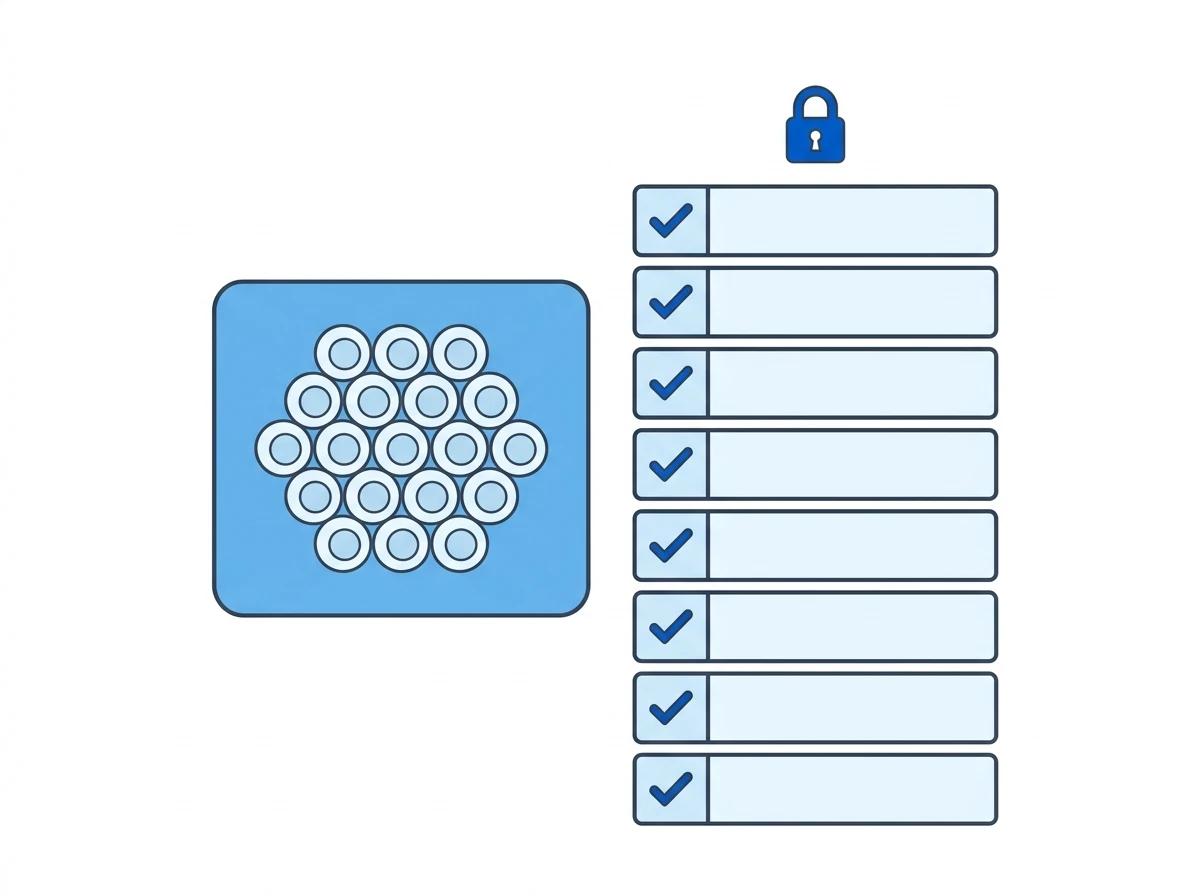
Data integrity is a specific, testable idea. Under 21 CFR Part 11, an electronic record that supports a regulated decision has to carry three things: an audit trail that logs who did what and when, electronic signatures on any change, and role-based access so that not everyone can edit or delete. Applied to a cell count, the instrument has to record the number and the full history of how that number was produced and touched.
An audit-ready count clears two bars, and most evaluations only check the first. It has to be provable, and it has to be trusted by the method you already run. A clean audit trail on a number your reference volumetric sizer disagrees with does not survive review. The next section turns those two bars into five requirements you can test.
The regulated chain is short and specific: count → viability → identity check → CoA / batch record, with a 21 CFR Part 11 audit trail, logs, electronic signatures, and role-based access wrapped around every step.
The five requirements of an audit-ready count
Treat these as a scorecard. An instrument that misses any one of them will cost you somewhere downstream — in a middleware project, a re-validation, or an audit finding.
1. Data integrity built into the instrument
So what. If compliance is bolted on from third-party middleware, you own the validation of the bolt-on, and the audit surface gets larger.
How to test it. Confirm the secure mode enforces unique per-user logins; distinct User, Reviewer, and Administrator roles; an electronic signature on every data-modifying action; deletion restricted to the administrator; and every modification and deletion written to a log, not silently overwritten.
2. Concordance with the method you already trust
So what. Concordance is what lets you add or swap an instrument without re-litigating your whole comparability story, so Quality will accept it.
How to test it. Run the candidate in parallel against your reference volumetric sizer on real product, across the concentration range you actually see, and look for no significant difference on concentration and size.
3. Precision you can defend on hard samples
So what. Cell-therapy material is small cells, debris, and low concentrations — exactly where image-based counts drift, and a wide CV becomes an argument with your auditor about why two reads disagree.
How to test it. Run replicates on a representative, messy sample and compare the spread to your current counter. Volumetric, direct-volume measurement holds a validated count CV under 2 percent, against 20 to 30 percent for image-based counters, measuring up to 40,000 particles per test rather than imaging a few hundred.
4. Viability and identity in the same read
So what. Splitting count, viability, and phenotype across three instruments and three schedules is where turnaround slips and cross-instrument disagreement creeps in.
How to test it. Confirm the count, viability, and a light CD4 or CAR marker run in a single walk-up read from a self-contained cassette with no reagent prep. In the peer-reviewed CAR-T study, viability, CD4, and CAR19 correlated with a reference fluorescence analyzer at r-squared values of 0.97, 0.997, and 0.90.
5. A validation path and the uptime to keep it
So what. An instrument that needs a middleware project to become compliant, or daily fluidics maintenance that can strand a lot, adds risk where you have none to spare.
How to test it. Ask for the IQ/OQ package, the documented bead-check and calibration cadence for a validated process, and the preventive-maintenance program. Favor a zero-fluidics design with no sheath fluid to manage and no daily cleaning step, on a footprint that fits in or beside the biosafety cabinet.
The audit-ready counting checklist
Take this into your evaluation. Score each instrument against the five requirements.
| Requirement | What the auditor asks | What good looks like | How to test it |
|---|---|---|---|
| Data integrity | Is it 21 CFR Part 11, with audit trail, e-signatures, and role-based access? | Native Secure Mode — a paid, activated audit-trail module: unique logins, User / Reviewer / Admin roles, e-signature on every change, admin-only deletion, logged modifications | Confirm the roles, the e-signature step, and logged, admin-only deletion |
| Concordance | How does the count compare to the reference method we trust? | No significant difference versus your reference volumetric sizer on concentration and size | Run it in parallel against your reference method on real lots, across your range |
| Precision | Why do two reads of the same lot disagree? | Under 2% CV versus 20 to 30% for image-based counters; up to 40,000 particles per test | Run replicates on a messy sample and compare the spread to your current counter |
| Viability + identity | Can it read live/dead and a CD4 or CAR phenotype? | Count, viability, and a light CD4 or CAR marker in one walk-up read from a no-prep cassette | Confirm one run, then check the validation against a reference fluorescence analyzer |
| Validation + uptime | Is there an IQ/OQ package, and what is the calibration cadence? | Native Part 11 with no middleware, an IQ/OQ package, a bead-check cadence, a PM program, and zero-fluidics uptime | Ask for the IQ/OQ package, the calibration cadence, and the PM tiers |
The table above is your scoring sheet. An instrument that misses any one requirement tends to cost you later — in a middleware project, a re-validation, or an audit finding. A Precision Cell Systems specialist can share a one-page version and the supporting documentation. Talk to a specialist →
How count, viability, and identity run in one at-line read
The five requirements describe a measurement that is proved, trusted, phenotype-aware, and validated. They belong in one guide because one read can satisfy all of them — at-line, in the time it takes to walk from the suite to the bench.
That is what the Moxi GO II was built to do. It is a benchtop cell analyzer, roughly seven pounds. From a single self-contained cassette, in a walk-up run under 15 seconds, it reports a volumetric count, viability, and a fluorescence identity marker such as CD4 or CAR. Volumetric, physics-based sizing measures each particle’s true volume directly, up to 40,000 particles per test, so the count concords with the reference method you already trust. A native 21 CFR Part 11 Secure Mode — a paid, activated audit-trail module rather than a factory default — with an audit trail, electronic signatures, and three access roles, is built into the instrument, so the record survives an audit without third-party middleware. Results export as a standard FCS 3.1 file that both Quality and Manufacturing can open, and that file embeds a log of every action performed on the data set.
A single walk-up run from a self-contained cassette returns a volumetric count (up to 40,000 particles per test), viability (live / dead), and a fluorescence identity marker such as CD4 or CAR — the size-versus-marker readout you would normally go to a flow core to produce.
The strongest evidence that this holds under manufacturing conditions is not a spec sheet. It is a peer-reviewed CAR-T manufacturing QC study from Penn Medicine, published in Cytotherapy in 2024. One benchtop analyzer measured concentration, size, viability, and two-color phenotype across the run, validated head to head against the reference instruments a GMP lab already uses. The study even plots cell size against marker fluorescence on the benchtop — the kind of size-correlated readout you would normally go to a flow core to produce.
| Parameter | Compared against | Result |
|---|---|---|
| Cell count and size | Reference volumetric sizer | No significant difference |
| Viability | Reference fluorescence analyzer | r² = 0.97 |
| CD4 expression | Reference fluorescence analyzer | r² = 0.997 |
| CAR19 expression | Reference fluorescence analyzer | r² = 0.90 |
Source: Pajarillo R, et al. Cytotherapy 2024;26(5):506–511 (DOI 10.1016/j.jcyt.2024.01.007). Count and size were compared against a reference volumetric sizer; viability, CD4, and CAR19 against a reference fluorescence analyzer.
The practical version is the phrase PCS uses: it puts the read in a lunchbox rather than in a core facility. Set it up with a PhD, run it with a tech.
Where a benchtop analyzer stops and the core facility starts
An honest guide names its own limits, and this audience trusts the tool more for it.
When the core facility stays the right tool
- The primary release assay has to be a full high-parameter identity or potency panel.
- A central lab batches dozens of samples in a single run.
- A one- to two-color read is not enough for the decision at hand.
When the benchtop analyzer earns its place
- You need the routine count, viability, and an identity-adjacent check at-line.
- You want to free the expensive instrument for the high-parameter work only it can run.
- The read has to be defensible under 21 CFR Part 11 out of the box.
The two are complements, not competitors. The audit trail deserves the same honesty: the Moxi GO II is a closed, standalone, non-networked system, so there is no network path to attack, and every modification and deletion is logged with deletion restricted to the administrator. The record lives on the device, so long-term data integrity still depends on your organization transferring and securing those exported logs under your quality system, on a defined cadence. Native Part 11 removes the middleware lift; it does not remove your responsibility for the records once they leave the instrument.
One more line to hold. These instruments are for research use, and the underlying measurement is validated for research use. The instrument gives you a count, viability, and identity data you can defend; your validated method and your quality system own the release decision itself. Drawing that line clearly is exactly what an auditor expects you to do.
The one thing to hold in the evaluation
Here is the tell that separates a short evaluation from a long one. Accuracy is table stakes in this segment. The serious closed-cassette counters are accurate too, so an accuracy argument between comparable instruments ends in a tie and wastes your time.
Move the comparison to where the differences are real and the audit actually turns: which instrument can your IT and Quality sign off without a middleware project, and which one lets you change the phenotype marker as your panel evolves rather than locking you to a fixed channel. Those are the criteria a closed, fixed-channel counter cannot easily match, and the ones your reviewers will still be asking about long after the accuracy numbers have tied.
Talk to a Specialist
Bring the five-requirement scorecard to a conversation with a Precision Cell Systems specialist. They can walk your Quality and IT colleagues through Secure Mode, share the IQ/OQ package, and help you plan an evaluation against the reference method you already run.