Brain Map - Part 4:
The List is Good, But Is the Map Better?
Brain Map Series - Part 4 of 5
(Prefer to listen to the full story? Click play to hear Episode 4 of our accompanying audio version.)
The Precision Point - Brain Map Series - Episode 4You have the cells. You have the nuclei. But do you have the Context?
Single-nucleus sequencing gives you a fantastic "List."
- 50,000 excitatory neurons.
- 20,000 angry microglia.
But think about it: Does the List tell you where the game is being played? In Alzheimer's, location is everything. Is that microglia attacking a plaque, or is it floating harmlessly centimeters away?
The List effectively puts the brain in a blender. You lose the neighborhood.
Enter Spatial Transcriptomics.
The Map
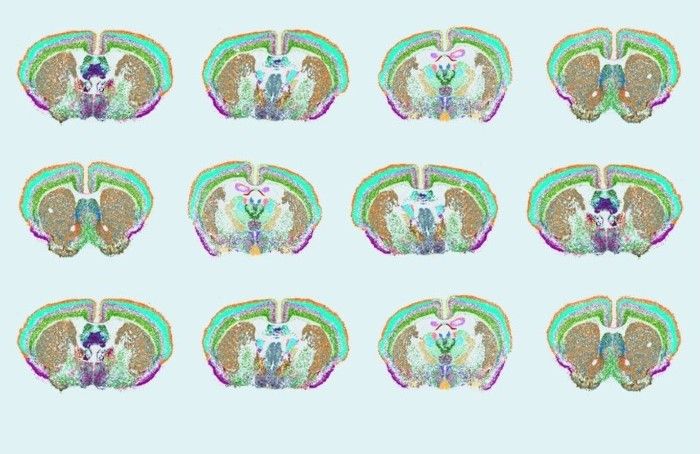
Imagine placing a slice of brain directly onto a glass slide and sequencing the RNA right where it sits.
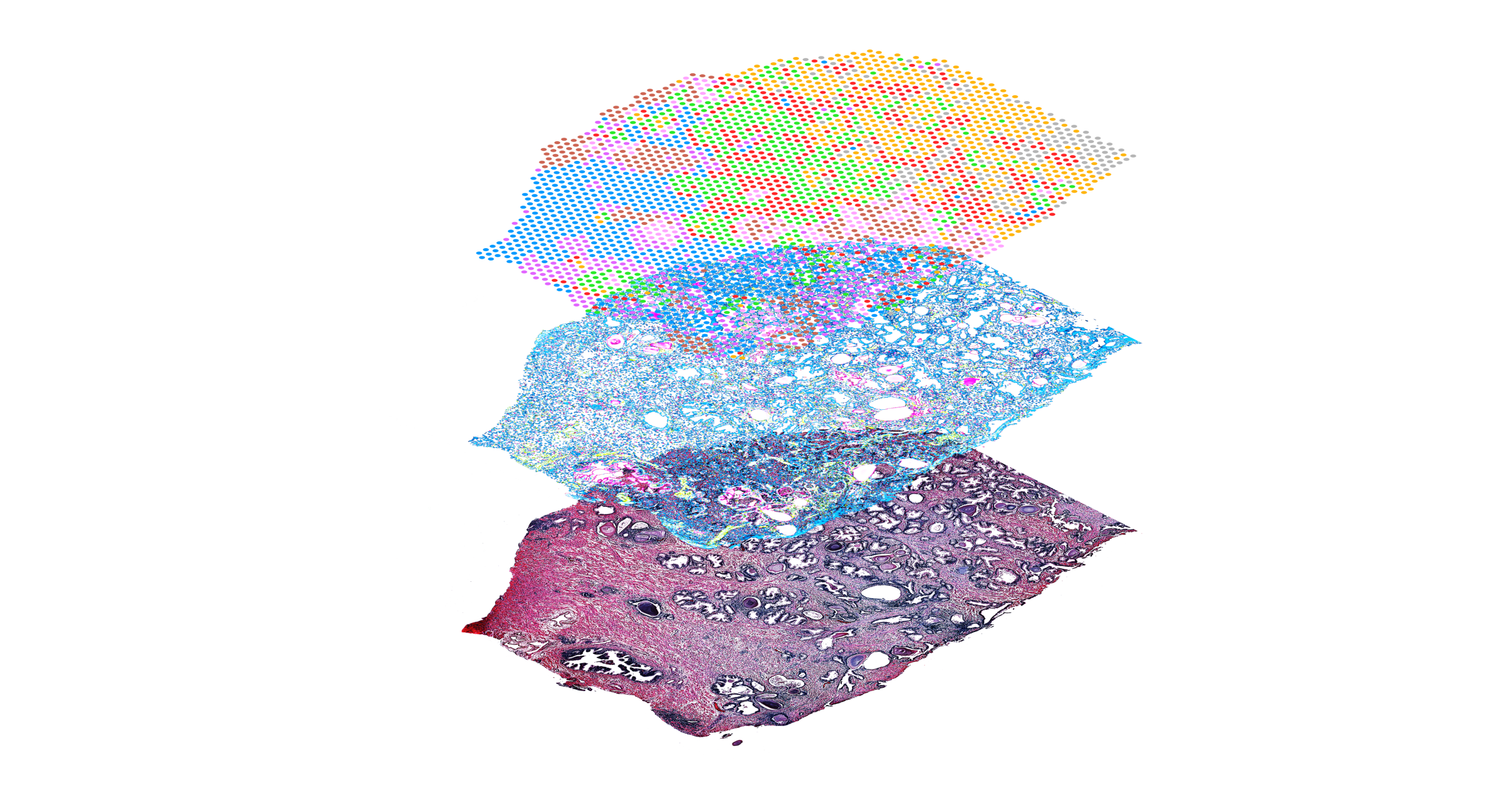
Now you have the "Map." You can see the layers. You can see the tumors. You can see the pathology.
But here is the catch: The Map is often blurry. It gives you location, but it lacks the deep, high-resolution identity of single-nucleus sequencing. It's like a satellite photo—you see the houses, but you don't know who lives inside.
The Fusion: Can You Have Both?
Why choose? The future isn't one or the other. It's the fusion.
Use the List (snRNA-seq) as your Rosetta Stone to define exactly who the cells are. Use the Map (Spatial) to find their coordinates.
Mathematically combine them, and you get the "Precision Point." You can map the deep identity of a specific cell onto the exact physical location of a disease plaque.
The Logistics Nightmare
But how do you actually do this?
It means running two complex experiments on the same sample.
- A slice for the Map.
- A second slice for the List.
Usually, that means two manual workflows and double the error. It's a headache.
This is where the Singulator becomes your MVP. It eliminates the error from your List slice and helps guarantee security in this "multi-omics" reality.
- It supports the hardest sample type of all—FFPE.
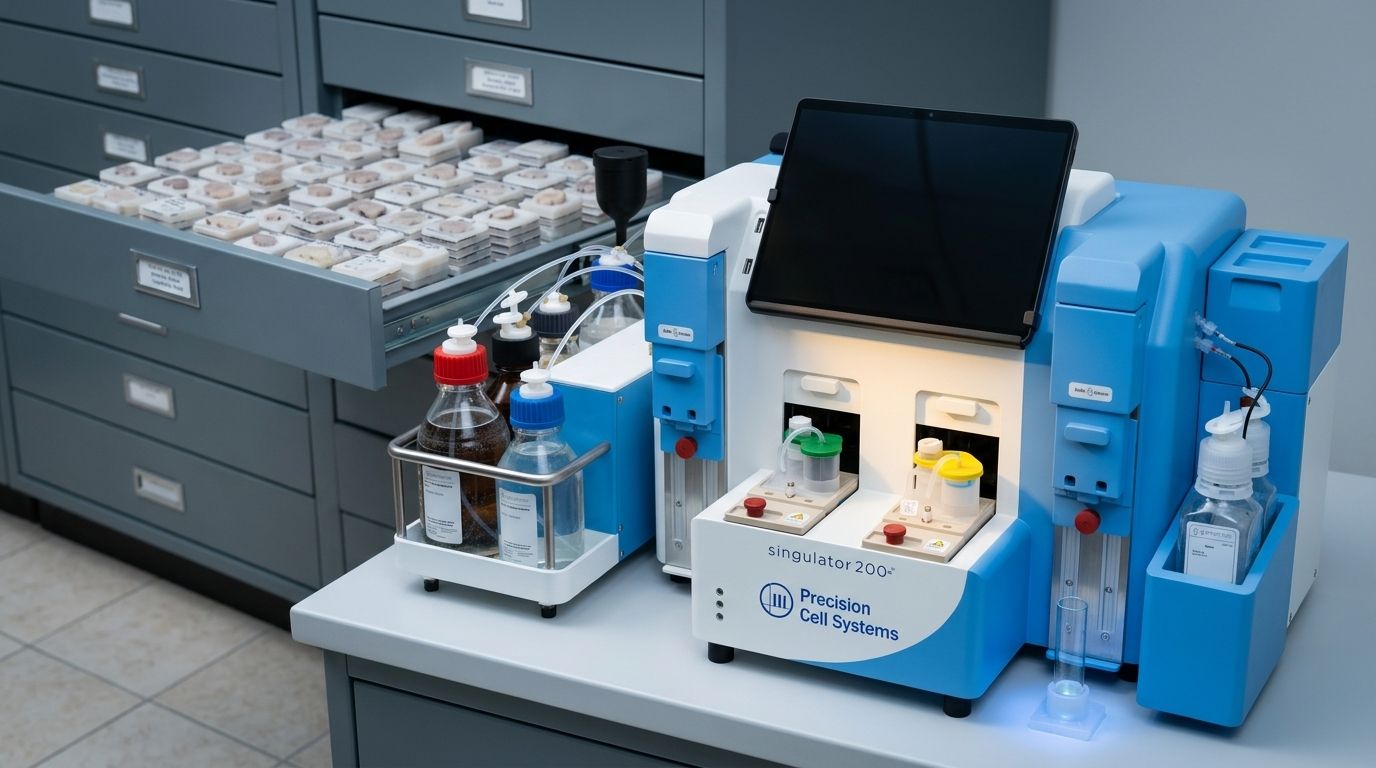
- You can follow either The Nuclei Isolation from FFPE Tissues for Single-Nuclei Sequencing Applications protocol or utilize the built-in fully automated, two-step protocol to pull clean nuclei from the List FFPE slice.
The Chisel
Pathologists love FFPE (wax-embedded tissue) because it preserves shape forever. Molecular biologists hate it because it turns tissue into a brick.
The Singulator acts as a precise "chisel." Its automated protocol gently cracks the wax and liberates the nuclei without destroying them.
One machine. Both jobs. The List for frozen samples and the List to fill in the details for the Map.
You have the parts. You have the location. What happens when you finally put them together?