Brain Map - Part 3:
Fresh vs. Frozen - Which Side Are You On?
Brain Map Series - Part 3 of 5
(Prefer to listen to the full story? Click play to hear Episode 3 of our accompanying audio version.)
The Precision Point - Brain Map Series - Episode 3Walk into any neuroscience conference, and you'll find a battle raging. It divides labs and complicates grants. The question is simple: Fresh or Frozen?
Which side are you on?
The Whole Cell Purists:
"Biology happens in the cytoplasm! That's where the protein is made. Sequencing only the nucleus is like reading the Wikipedia summary instead of the novel. You miss the nuance."
The Nuclear Pragmatists:
"The 'truth' of fresh tissue is a hallucination. You are mapping stress, not biology."
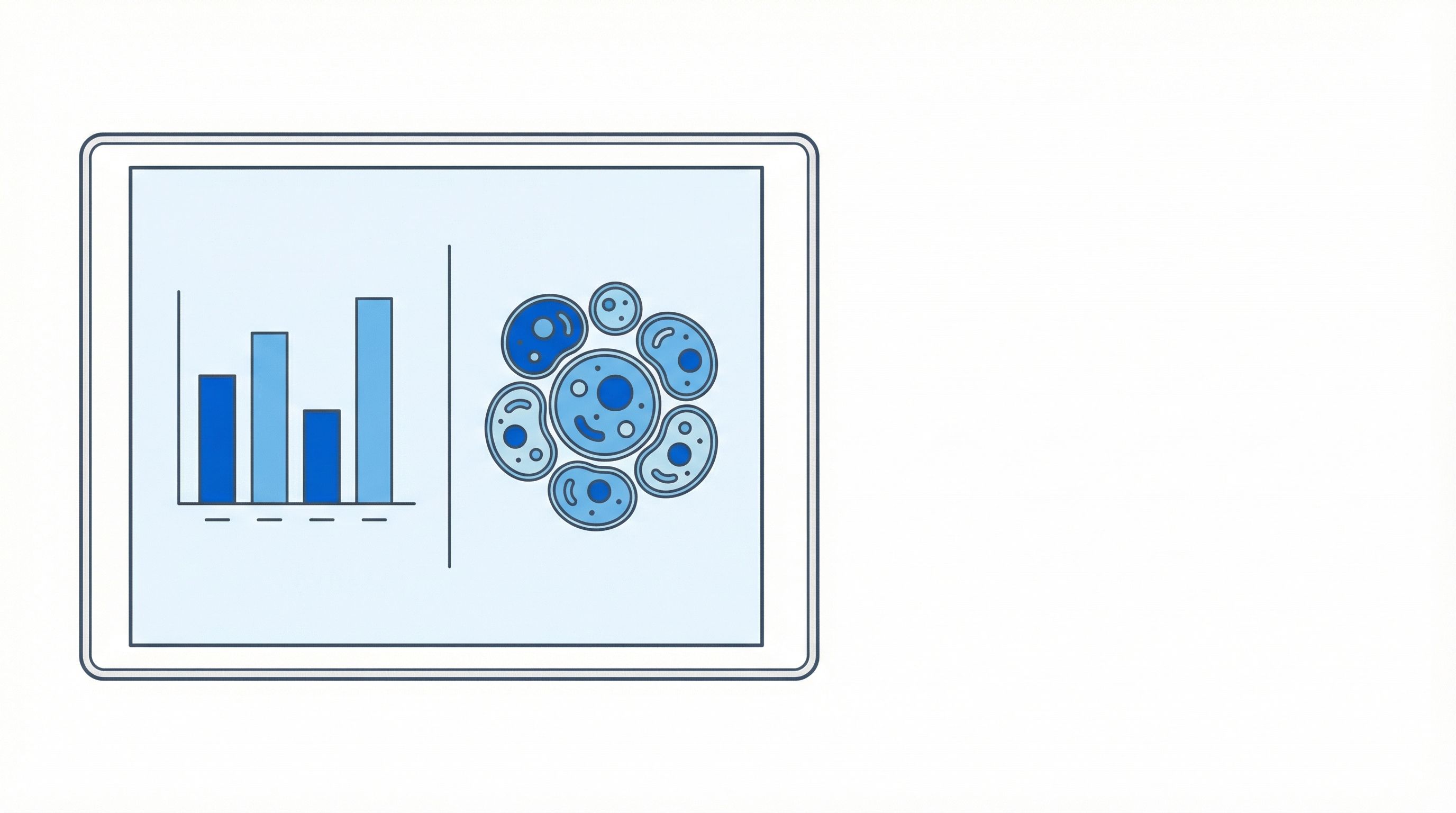
It looks like the Pragmatists are winning. Do you know why? One word: Bias.
The Survival Experiment
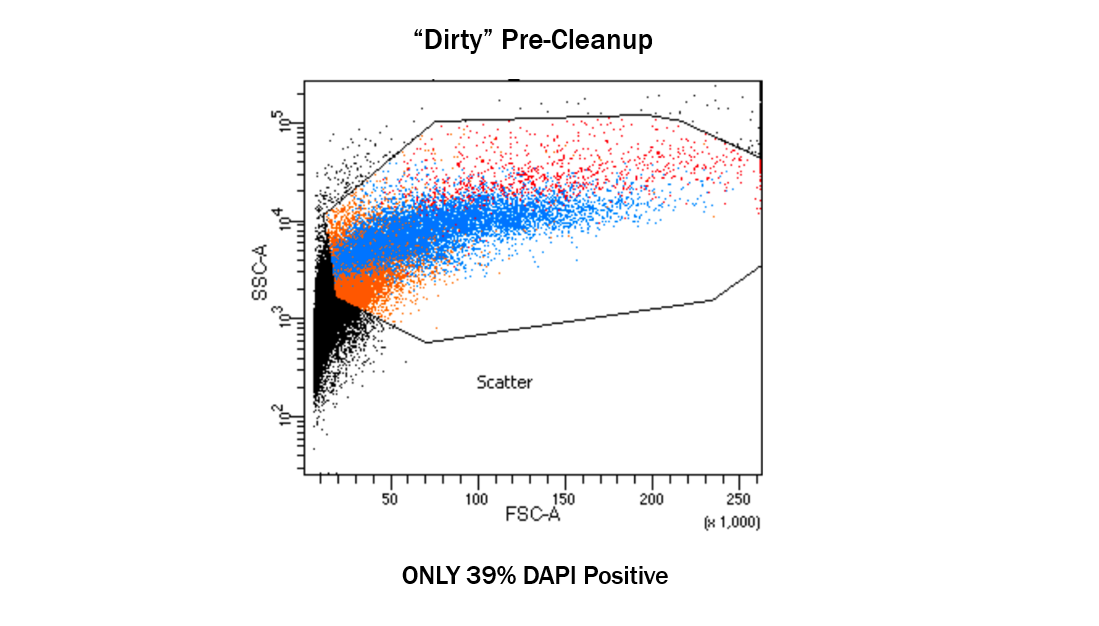
Think about what happens when you process fresh brain tissue. You take a solid chunk and try to turn it into a liquid suspension.
You use enzymes to dissolve the glue. You use heat. You use mechanical force.
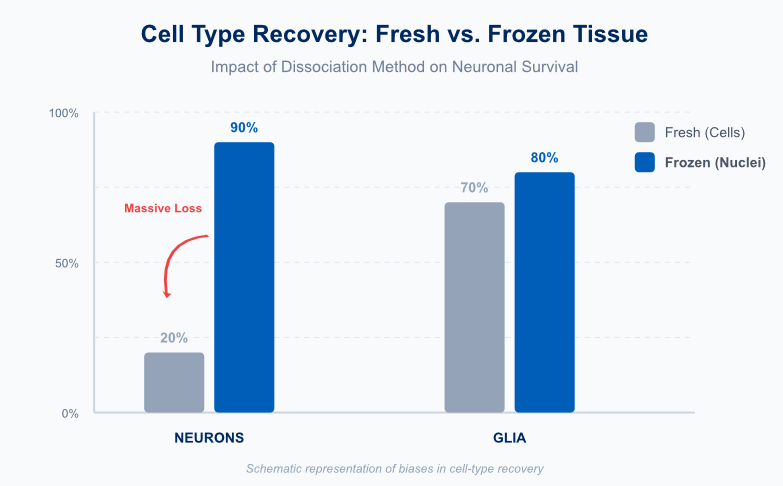
- Fragile Neurons: They hate this. They shear and die.
- Reactive Glia: They panic. They sense the damage and switch into "emergency mode."
When you look at that fresh data, are you seeing the patient's brain? Or are you seeing the survivors of a car crash? The neurons are missing. The glia look angry. It's a high-resolution map of a disaster.
The Nuclear Truth
Now, consider the frozen alternative.
Snap-freeze the brain at the moment of collection. Everything stops. The stress signals don't fire. The biology is locked in amber.
When you process this with a nuclei isolation protocol (like the automated one on the Singulator), you aren't trying to keep the cell alive. You intentionally break the wall. You wash away the cytoplasm. What remains is the nucleus—a tough, compact vault holding the genetic blueprint.
The difference?
- Everyone Shows Up: Even the big, fragile neurons survive the process.
- No Drama: The stress signatures are gone.
- Time Travel: You can study the past. You can't run a fresh experiment on a patient who died five years ago. But you can run a frozen one.
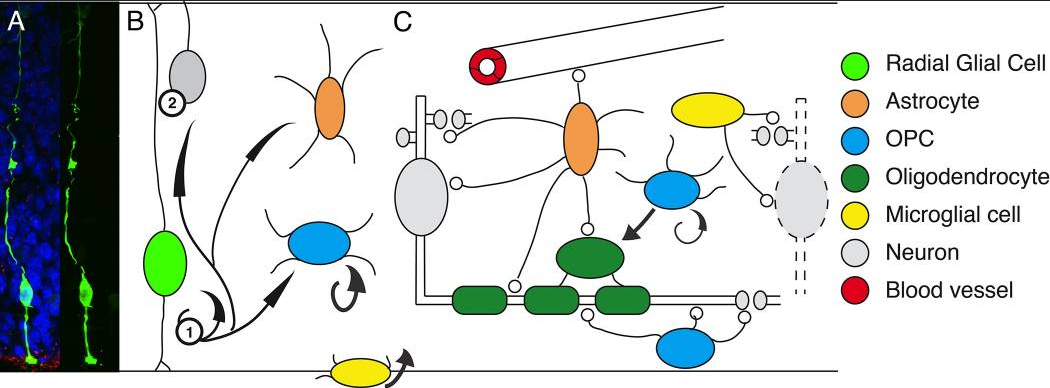
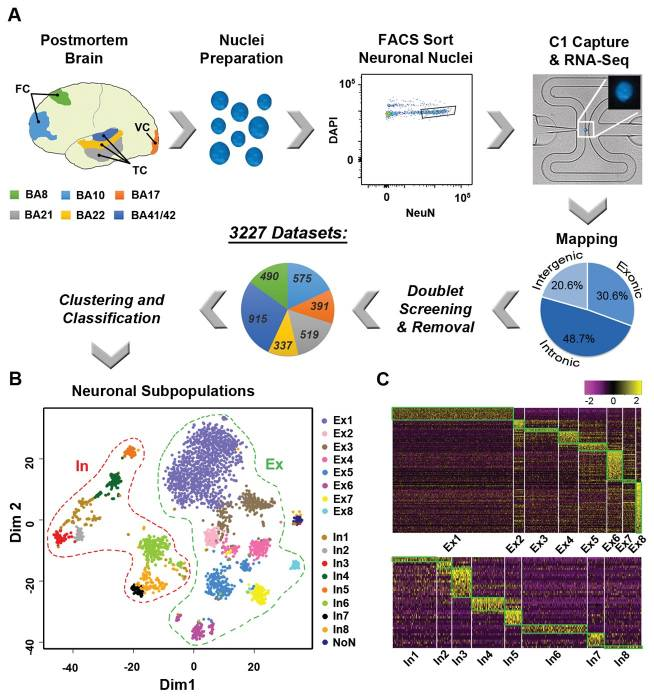 Source: Fig. 1, Lake et al., 2016 (Science)
The Compromise?
Yes, you lose the cytoplasmic RNA. But does it matter?
Studies show that the "Wikipedia summary" in the nucleus correlates almost perfectly with the whole cell. It is enough to identify cell types. It is enough to see disease states.
Most importantly, it is unbiased.
The New Standard
This is why the BICAN Atlas standardized on frozen nuclei. A messy map of the whole population is worth more than a perfect map of the wrong population.
The Singulator system was built for this reality. It wasn't designed to baby live cells; it was designed to get the most pristine nuclei out of the toughest frozen tissue.
So, you have the list of ingredients. But is knowing what is in the brain enough? Don't you need to know where it is?