Brain Map - Part 2:
What Is Ruining Your Frozen Experiments?
Brain Map Series - Part 2 of 5
(Prefer to listen to the full story? Click play to hear Episode 2 of our accompanying audio version.)
The Precision Point - Brain Map Series - Episode 2Every great story needs a villain. In the quest to unlock the frozen brain, do you know who stands in the way?
Myelin.
To a neuroscientist, myelin is a miracle—the fatty insulation that lets thoughts move at 100 meters per second. But to a researcher trying to sequence a frozen brain, myelin is a nightmare.
Here is the reality: When you grind up frozen brain tissue to liberate the nuclei, that fat doesn't disappear. It shatters. It becomes millions of sticky, waxy shards. Put that fatty soup into a microfluidic chip, and it acts like molecular concrete.
The Three Disasters
Have you ever faced these failures in the lab?
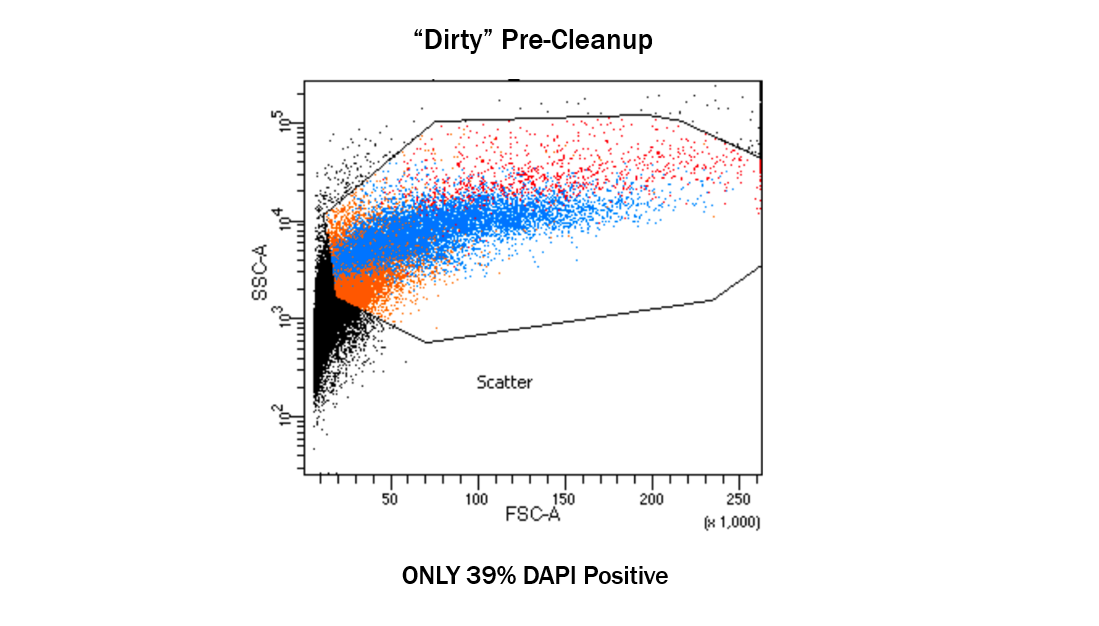
- The Clog: Modern chips use channels thinner than a hair. Myelin gums them up instantly. The run fails. The sample is lost.
- The Phantom Count: To a cell counter, a shard of myelin looks exactly like a nucleus. You think you loaded 10,000 cells? You actually loaded 2,000 cells and 8,000 pieces of trash. The data comes back empty.
- The Trap: Myelin is sticky. It clumps together, trapping your precious nuclei and dragging them down the drain during wash steps.
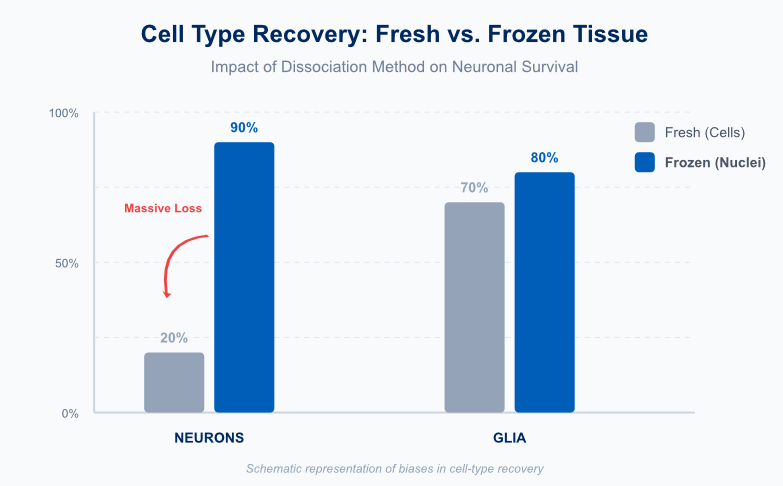
For years, this forced a terrible choice: Do you use Fresh Tissue (and accept the stress artifacts)? Or do you use Frozen Tissue (and accept the brutal manual cleanup)?
The Manual Grind vs. The Robot
The traditional fix was the "density gradient." Layering sugar water with the steady hand of a bomb disposal technician, followed by an hour of spinning.
It works... sometimes. But can you build a global brain atlas if the data depends on how much coffee the technician had that morning? Inconsistency kills science.
The field needed a better way.
Enter the Singulator
What if you could turn that nightmare workflow into a button press?
The Singulator introduced the Nuclei Isolation from Frozen Mouse Brain Tissue for Single Nuclei Sequencing Applications protocol. It's a technical name for a simple concept: Automated, reproducible clean-up.
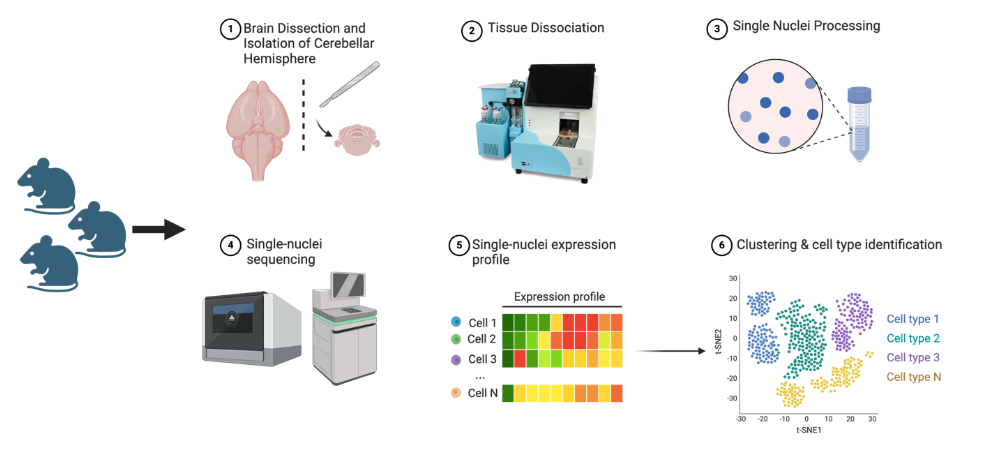
This protocol understands brain physics. It uses a specific rhythm and specialized buffers to handle the grease. It isolates the nuclei and filters out the fatty debris automatically.
- Time: 30 minutes.
- Input: The messiest, fattiest brain regions you have.
- Outcome: Clean nuclei, ready to sequence.
The Relief
Imagine the anxiety of the "clogged chip" disappearing. Imagine batch-to-batch consistency becoming the norm.
By automating the cleanup, the field unlocked the frozen archives. Those precious Alzheimer's samples are finally accessible. The villain has been neutralized.
But even with the debris gone, a massive controversy remains. Ask yourself: Is the nucleus actually enough? Or are you throwing away the best part of the cell?