Brain Map - Part 1:
Why Did Science Miss Half the Brain?
Brain Map Series - Part 1 of 5
(Prefer to listen to the full story? Click play to hear Episode 1 of our accompanying audio version.)
The Precision Point - Brain Map Series - Episode 1For a century, neuroscience has been obsessed with a single cell.
And can you blame the field? The neuron is the diva. It buzzes with electricity, fires signals at lightning speed, and creates thought itself. Naturally, the assumption was simple: The brain is the neuron. If the brain is sick, the neuron must be silent.
So, billions of dollars were spent asking one question: "How can the neuron be saved?"
But pause for a second. Ask a different question: "Why are they dying?"
When you look at the neighborhood around the dying neuron, a bustling ecosystem appears—one that science ignored for decades. These cells were dismissed with a single, slightly insulting name: "glia" (Greek for "glue").
The assumption? They were biological packing peanuts. Just filler.
But what if the packing peanuts are actually running the show?
The "Sentient" Packing Peanut
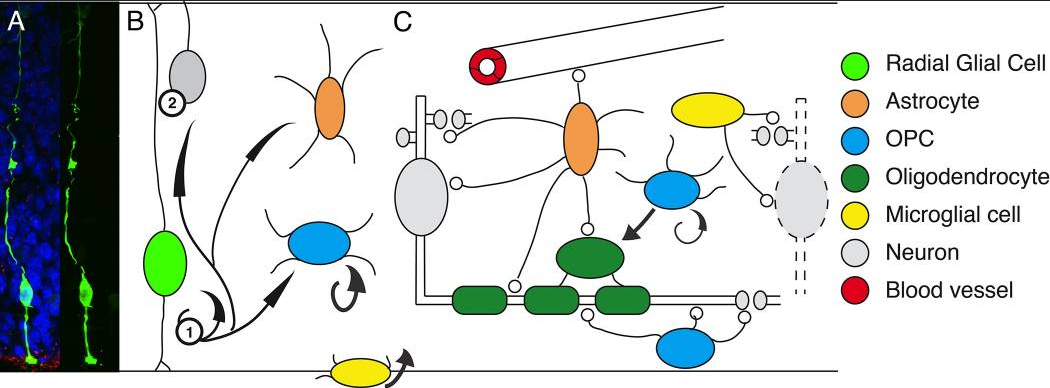 Source: Fig. 1, Allen and Lyons, 2019
Recent breakthroughs prove that the "glue" is aggressive, active, and critical.
- Microglia: Think of them as electricians. They don't just clean up; they trim the wiring. What happens when they stop protecting the house and start tearing it down? You get Alzheimer's.
- Oligodendrocytes: The pit crew. They wrap neurons in insulation (myelin). If the pit crew goes on strike, does the race car stand a chance?
- Astrocytes: The city planners. They control the chemical environment. If they turn toxic, the neuron doesn't stand a chance.
Neurodegenerative diseases often aren't failures of the neuron. They are failures of the support system.
How Did We Miss This? (And Why Does It Matter?)
Why did this remain invisible for so long? Blame the blender.
For decades, "bulk sequencing" was the standard. Imagine blending a fruit salad and trying to taste a single grape. The loud neurons drowned out the quiet glia.
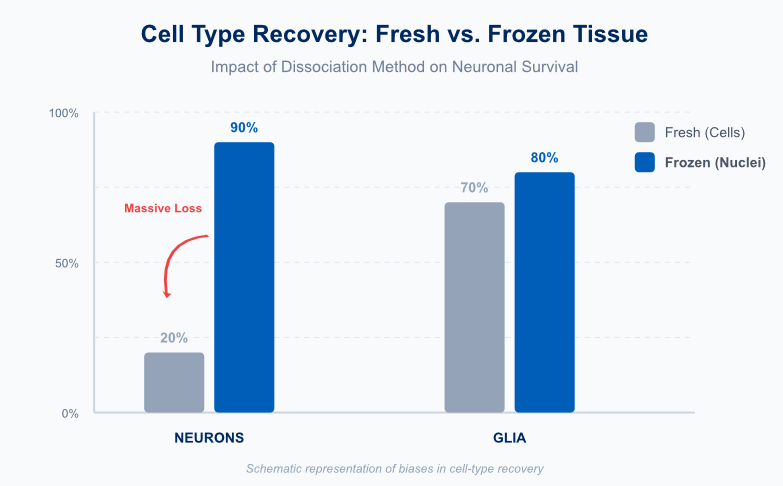
Then came Single-Cell RNA Sequencing. Finally, you could look at cells one by one. But there was a catch: You have to turn solid tissue into a liquid soup of live cells.
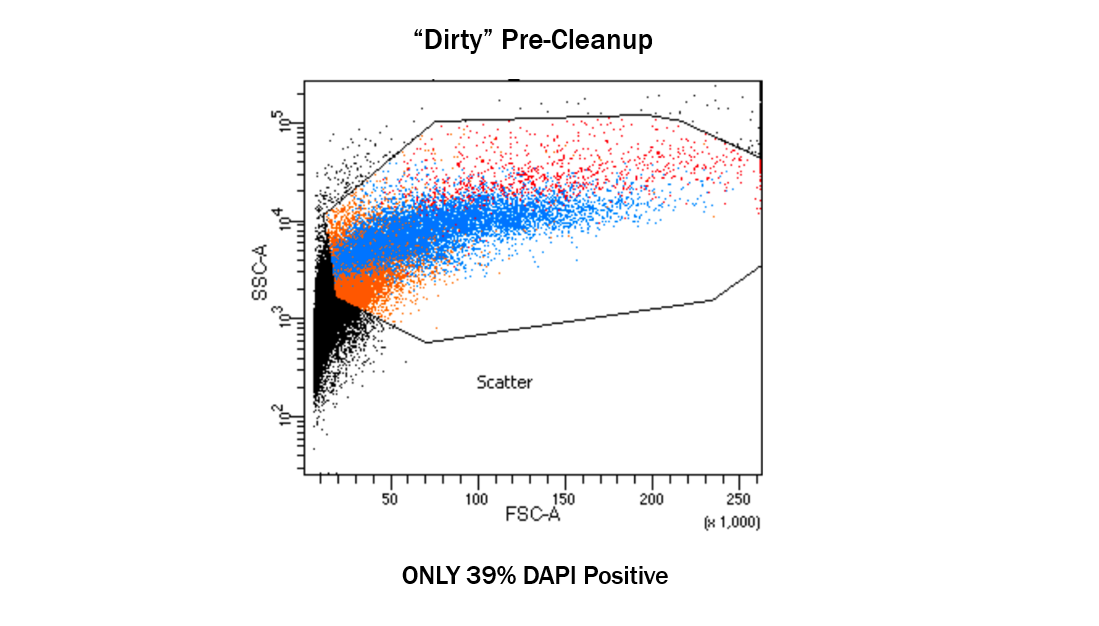
Have you ever tried to pull an ancient oak tree out of the ground? The roots snap. Adult human neurons are just as fragile. In the process of dissociation, the neurons die, and the surviving glia panic. The data becomes a map of a disaster, not a brain.
The Pivot: Are You Ready to Freeze?
The solution required a radical shift. Stop trying to keep the fussy cell alive. Focus on the vault holding the instructions: the nucleus.
Single-Nucleus RNA Sequencing changed the game. By freezing the brain immediately, you lock biology in amber. No stress. No death. No bias.
Suddenly, biobanks of Alzheimer's tissue—previously useless for single-cell work—became gold mines. The missing half of the brain was finally visible.
But unlocking the frozen brain revealed a new villain. The very thing that makes the brain work—fat—was waiting to ruin the experiment.